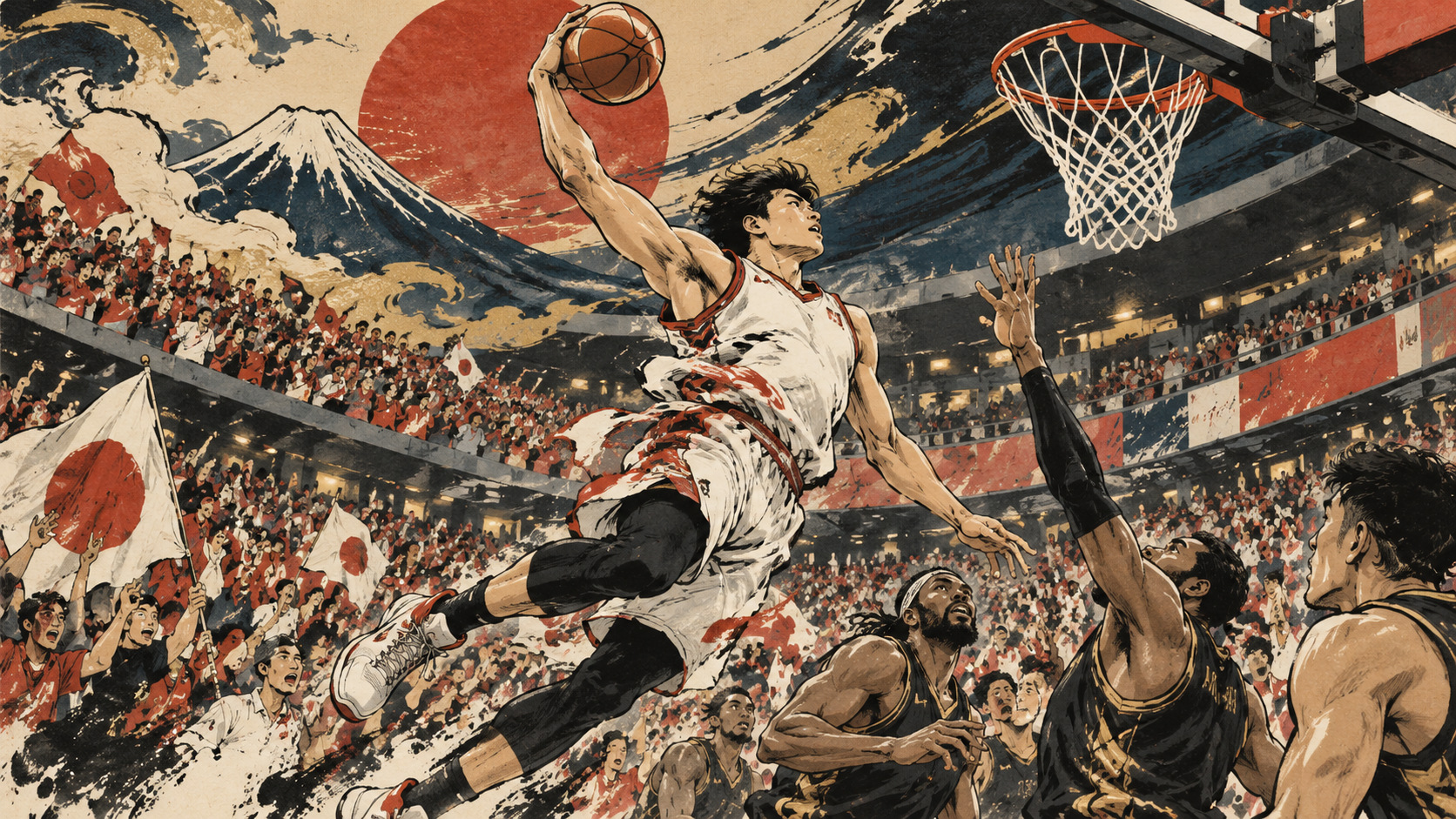
From a divided past to a shared stage
On September 22, 2016, a crowd of 9,132 watched Alvark Tokyo beat the Ryukyu Golden Kings 80–75 at Yoyogi National Gymnasium. The result mattered less than the institutional change behind it. Japanese professional basketball had struggled with divided leagues and a crisis serious enough to lead to the national governing body’s international suspension. Launching B.LEAGUE offered a common competition and a new commercial proposition: a basketball game could be a major live entertainment product, not merely a fixture on a sports calendar.
A rematch with a different business purpose
Exactly a decade later, on September 22, 2026, the same pairing opened B.LEAGUE PREMIER at TOYOTA ARENA TOKYO. Alvark won 84–73. The symmetry was deliberate, but the real change is not the score. The first decade sought organizational legitimacy, national reach and fans. The next phase asks whether Japanese basketball can sustain the capital expenditure, payrolls and sophisticated arena operations associated with a mature professional sports industry.
Changing what a place in the top league means
The overhaul, known in Japan as B.革新, creates B.LEAGUE PREMIER, B.LEAGUE ONE and B.LEAGUE NEXT. Automatic promotion and relegation based on results have been abolished. Clubs can still seek higher placement through an admission and licensing process that assesses business capacity, attendance and venues. PREMIER launched with 26 clubs across two conferences. The strategic argument is that a club considering a costly arena or a multiyear partnership needs greater certainty than a single season’s win-loss record can provide. The counterargument is that commercially stronger clubs may enjoy barriers against ambitious but poorer rivals.
The balance-sheet test
Consider the league’s published admission findings for Akita Northern Happinets and Osaka Evessa: each met the stated ¥1.2 billion revenue threshold for the assessed financial year, while average attendance for the assessed 2023–24 season was 4,342 and 4,716 respectively. Those figures are historical licensing evidence, not audited current-year numbers. That distinction matters. Minimum commercial scale may make the new league more bankable, but revenue does not by itself indicate net income, available cash or the obligations that come with larger venues.
An arena is a business model, not a building
The list of participating clubs reads like a tour of Japanese venue investment: Chiba Jets at LaLa arena TOKYO-BAY; Nagoya Diamond Dolphins at IG Arena; Kobe Storks at GLION ARENA KOBE; Nagasaki Velca at Happiness Arena; and Alvark Tokyo at TOYOTA ARENA TOKYO. Each venue offers a chance to sell experiences beyond the game itself—premium seating, food, merchandise, concerts and corporate hospitality. Yet each brings capital costs, maintenance, staffing and transport needs. Counting sellouts while ignoring the full cost of ownership would be a poor test of success.
Who captures the spillover?
Local governments and developers often emphasize visitor spending. A serious economic-impact study asks how much of that spending is genuinely additional to the locality rather than shifted from another restaurant, theater or entertainment option. It must distinguish the club’s accounts from the arena operator’s, account for public financing and evaluate match-day congestion. A successful club can be good for a community without every arena project delivering a positive public financial return.
A new wage floor as well as a ceiling
The league’s current published salary-cap framework places PREMIER’s cap at ¥800 million and its floor at ¥500 million, subject to detailed rules on taxation and compensation. A floor is consequential: it signals that the highest tier is designed to sustain a minimum level of investment in players rather than simply prevent the richest teams from spending. Contract disclosure and auditing rules will be essential to judging whether those numbers create competitive balance or merely reset the cost of entry.
Draft rights, young talent and club incentives
The first B.LEAGUE draft was scheduled for January 29, 2026. The league has also introduced rules for youth-player priority negotiations and training compensation. Those mechanisms seek to reward development and spread opportunities beyond an unrestricted bidding system. They should be tested against actual outcomes: opportunities for young Japanese players, salary progression, youth-academy investment and whether smaller clubs can retain or be compensated for homegrown talent.
Broadcast audiences are not guaranteed income
Premier status can help sponsors explain a long-term investment. The potential value goes beyond signs visible on television: memberships, digital engagement, hospitality, community relationships and internationally marketable content. But negotiations are commercial, not automatic. Readers should resist treating follower counts as paying customers or announced distribution availability as an audited audience. Rights fees, geography, duration, platform costs and verifiable viewing metrics are the relevant numbers.
The community dividend
The largest test may be civic rather than athletic. New buildings must be accessible by transit and affordable enough for families, while youth programs and inclusive community access must coexist with higher-priced professional entertainment. Where public money or land is involved, governments should publish costs and benefit assumptions. A sold-out match is a celebration; it is not an audit.
The next ten years
A professional league has to produce stars and compelling games. It also has to retain sponsors, fill seats repeatedly, use expensive facilities on non-game days and maintain credible finances. B.LEAGUE PREMIER has made its wager: a stable commercial platform can foster a better sporting product and regional vitality. Whether Japan has built a durable basketball economy will be determined in annual accounts, not opening-night spectacle.