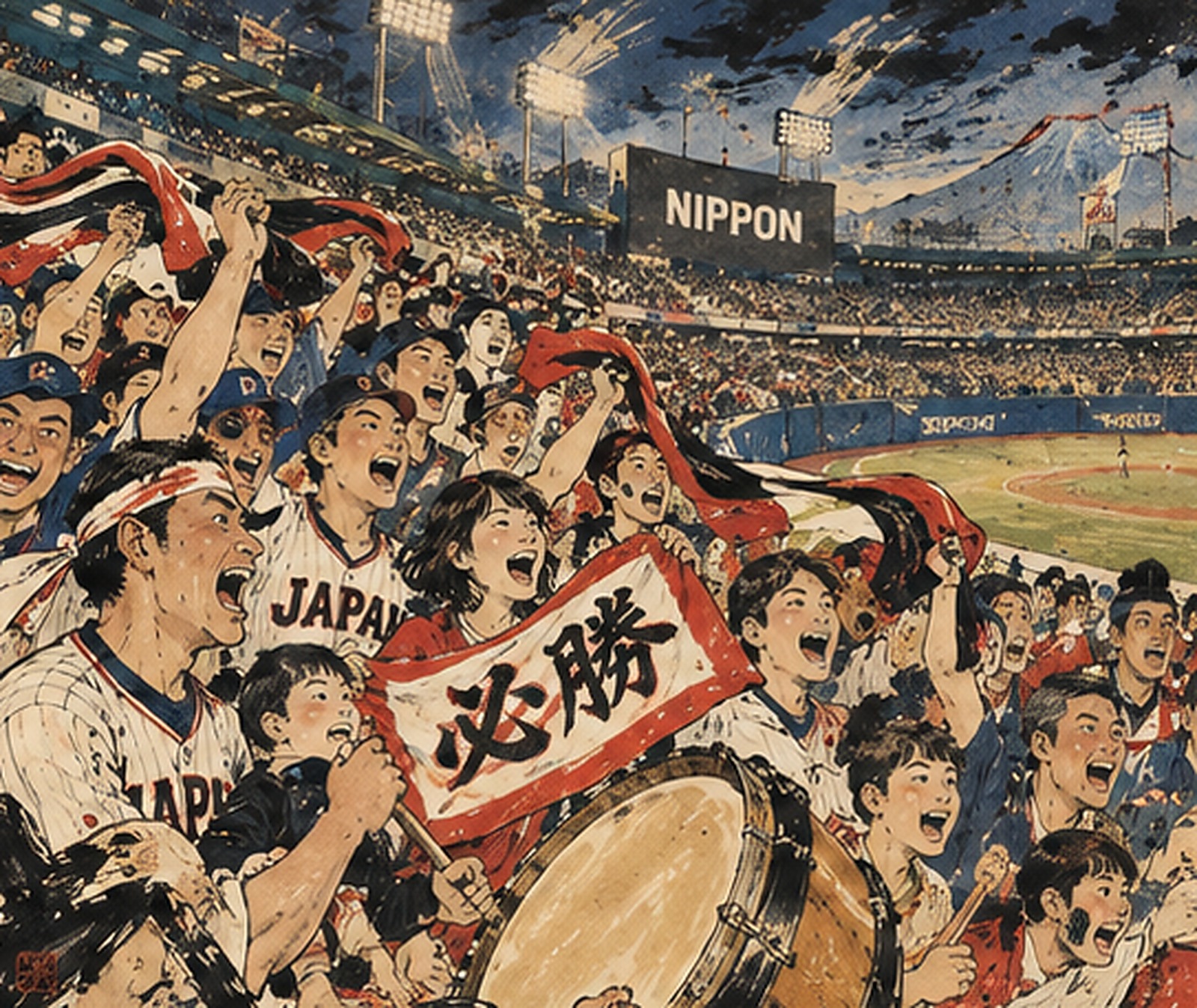
The other game in the stands
A batter settles into the box. From the outfield comes a drumbeat, then a trumpet melody. Some spectators answer with a memorized chant; others watch the pitcher in silence. Before a ball is thrown, the crowd has transformed the atmosphere. In Japanese professional baseball there is a second performance alongside the one on the field: the audience’s own, carefully cultivated traditions.
As the Climax Series opens on October 10, Japan’s baseball story is not only about which club advances. It is about why supporters return through changing rosters, losing seasons and the passage of generations. Team songs, organized cheering, ballpark meals and memories attached to familiar seats help make an individual game part of a longer relationship.
A caution is essential. There is no single Japanese fan experience. Outfield chanting sections coexist with quieter seats, first-time visitors, families and spectators who come chiefly for the sport. The culture is most interesting when its variety, and its limits, are acknowledged.
Before the trumpets: baseball becomes a public ritual
Japan’s baseball history long predates its professional leagues. According to NPB’s historical timeline, the forerunner of the summer high-school championship began in 1915; Koshien Stadium opened in 1924; and university rivalry, including Waseda and Keio, drew large public attention. Those gatherings already linked baseball to institutions and communities.
A visit by Babe Ruth and other American stars in 1934 helped energize professional ambitions. Japan’s first professional league was founded with seven clubs in 1936. Wartime interruption followed, then the two-league structure in 1950. Television baseball broadcasts developed in the 1950s, bringing the game into households that might rarely have visited a stadium.
That evolution was more than a sequence of competitions. Newspapers, transport companies, broadcasting and local commerce helped attach clubs to particular places. Baseball could become a marker of family identity, even when the team changed players, home grounds or corporate ownership.
How a chant becomes a shared language
The Hiroshima Toyo Carp’s official first-visit guide describes singing along with drums and trumpets from the Carp Performance seating area. The club also publishes player-specific cheering songs. A newcomer can listen on one visit and find themselves singing on the next.
That repetition matters. A song for a familiar player, a rhythm before a key at-bat and the pause that follows a strikeout give spectators a role in the evening. The effects cannot be reduced to a claim that loud cheering makes a team win. Rather, songs help people recognize one another as participants in a continuing story.
This raises questions of access. Not every fan wants to sing, and a crowded, noisy stadium may be difficult for children, older visitors or people sensitive to sound. The most inclusive ballpark allows different ways of belonging instead of treating one style of support as compulsory.
A celebrated tradition, governed by rules
Instrumental and organized cheering are not unregulated freedoms. NPB’s spectator contract and special cheering permission rules establish approval procedures for drums, trumpets, large flags and coordinated groups. The stated purpose includes protecting safe, peaceful viewing and orderly game operations.
NPB traces part of the modern framework to its 2003 declaration against organized-crime involvement and its subsequent spectator-contract measures. The rules have since been updated; the permission status of a particular instrument, banner or activity should always be checked against the host club’s current instructions.
This is the tension at the center of fan culture. A coordinated section can create extraordinary energy, but unchecked behavior can intimidate people sharing the same space. Protecting a tradition also means making room for those who choose to experience it differently.
Hiroshima: a stadium with a local memory
At Mazda Stadium, the Carp’s guide describes a CC dance after the bottom of the fifth inning and a rendition of the team song before the seventh-inning attack, alongside balloon activities listed in the guide. These are published descriptions of spectator experiences, not a guarantee that each element will occur at every future game.
Such rituals connect the ballpark to its surroundings. Supporters arrive in team colors, buy food, meet friends and carry the postgame conversation into the streets. Nearby businesses can receive additional foot traffic, but that observation alone cannot establish net economic benefit or tell us how much spending would otherwise have remained in the neighborhood.
What a balance sheet cannot fully measure is a grandparent introducing a child to the same song heard decades earlier. Sports facilities can function as repositories of memory, sustained not by plaques but by repeated acts of attendance.
The regional menu as part of the ticket
In March 2026, the Tohoku Rakuten Golden Eagles announced a stadium food program with about 80 outlets and menus intended to showcase the Tohoku region. The figure is the club’s description of its offering; it does not verify independent outlet sales or the proportion of locally sourced ingredients.
Fukuoka SoftBank Hawks similarly organizes its stadium dining guide around distinctive foods, player-related products, locations and mobile ordering. These systems reflect the wider transformation of ballparks into venues for long, varied experiences—not just nine innings watched from a seat.
Dining can strengthen the relationship between a club and its region, and it creates commercial opportunities. Yet there are tests beyond variety: affordability, accessibility, clear allergen information, comfortable queues and payment options. A memorable local meal has limited cultural reach if significant groups of supporters cannot obtain it.
Loyalty is not the same as victory
The memories supporters pass down are not all triumphs. There is the long rain delay, the first cap bought for a child, a player who never became a star and the defeat that hurt enough to remain vivid. These experiences give loyalty a continuity beyond results.
Nor does a home club necessarily mean a club near one’s current address. A fan may follow a team because of a parent, a former hometown or a bond formed before relocation. Japanese baseball’s regional identities are powerful, but they are neither exclusive nor fixed.
First-visit guides, published team songs and accessible public information can help new supporters enter those traditions without needing an insider to explain every convention. Continuity depends as much on welcoming newcomers as on preserving old memories.
What October leaves behind
The opening of the Climax Series will concentrate attention on a few games and a few decisive moments. But the songs, food rituals and relationships developed across a season do not disappear when a club is eliminated. They carry the sport into the winter and shape who comes back next spring.
That is why the future of Japanese professional baseball cannot be judged solely by wins, television contracts or star transfers. Clear ticket prices, safe stands, regional involvement, practical accessibility and space for quieter spectators are all part of sustaining a public culture.
The most compelling thing about a Japanese baseball crowd is not that everybody makes the same noise. It is that thousands arrive with different histories, watch the same uncertain contest and sometimes find a common rhythm. That is a tradition worth investigating as well as celebrating.
Sources and references
- 日本野球機構「日本野球の歴史」 — official Japanese source
- 野球殿堂博物館「日本野球の歴史」 — official Japanese source
- 広島東洋カープ「はじめてのマツダスタジアム観戦ガイド」 — official Japanese source
- 広島東洋カープ「選手応援歌」 — official Japanese source
- 広島東洋カープ公式サイト — official Japanese source
- 東北楽天ゴールデンイーグルス「360°TOHOKU GOURMET」(2026年3月28日) — official Japanese source
- 福岡ソフトバンクホークス「ホークスグルメ」 — official Japanese source
- 日本野球機構「試合観戦契約約款」 — official Japanese source
- 日本野球機構「特別応援許可規程」 — official Japanese source
- 日本野球機構「試合観戦契約約款のご案内」 — official Japanese source
- 阪神タイガース「TIGERS B-LUCK DYNAMITE SERIES」 — official Japanese source
- 日本野球機構「草創期のプロ野球」 — official Japanese source
Reporting limits: cheering schedules vary by stadium and event; independently verified concessions revenue, net local economic effects and fan retention figures were not available for this feature.