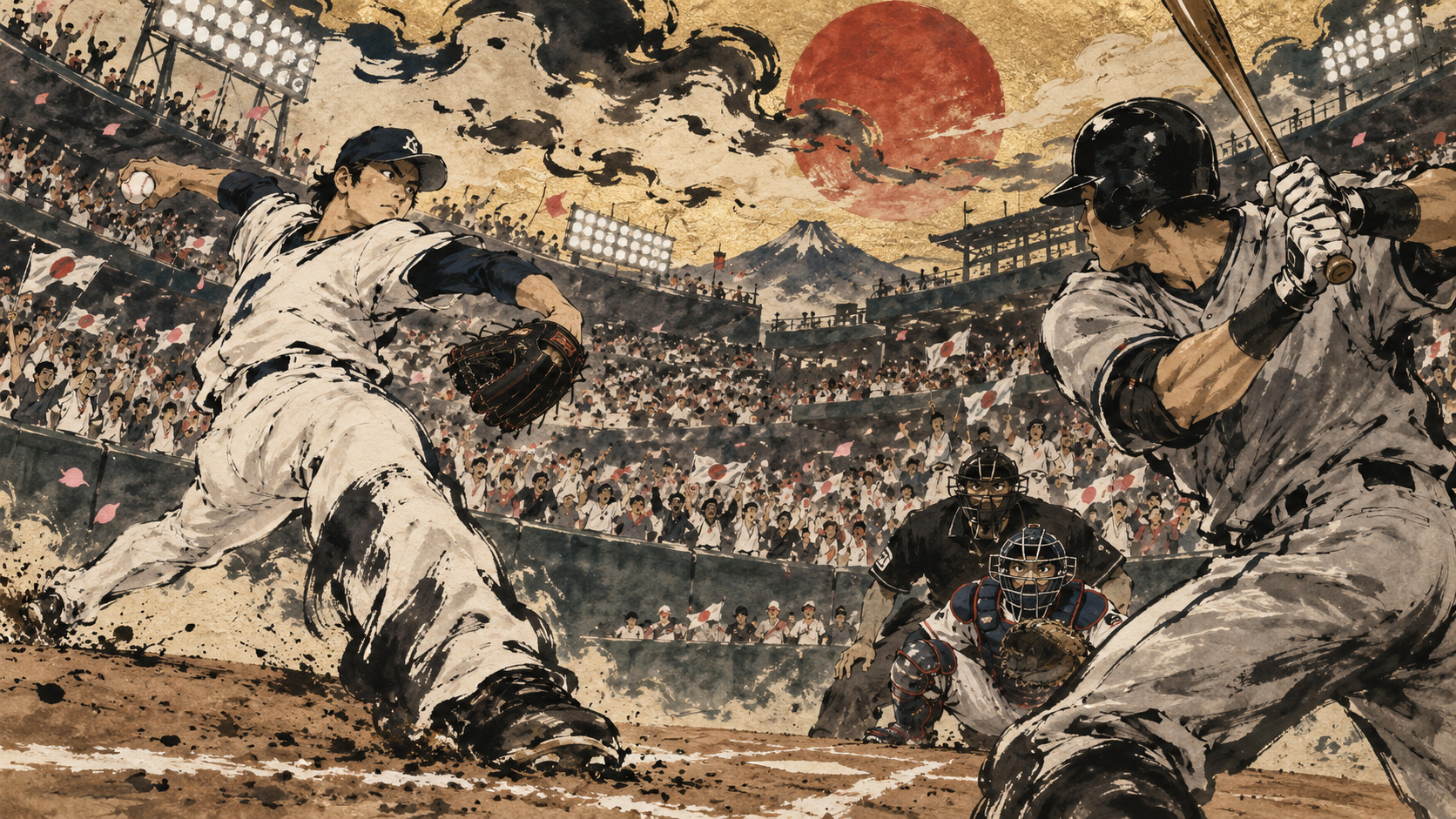
Two cities, one first pitch
At 2 p.m. Japan Standard Time on Saturday, October 10, the Nippon Professional Baseball postseason opens simultaneously in Tokyo and Saitama. The Yomiuri Giants host the Yokohama DeNA BayStars at Tokyo Dome, while the Saitama Seibu Lions welcome the Hokkaido Nippon-Ham Fighters to Belluna Dome. Each contest is the first game of a best-of-three first stage. Both series coincide with the start of a three-day holiday weekend.
The pairing is more than a fixture announcement. It is a collision between what a 143-game season can establish and what two or three October games can overturn. Unlike a championship final with a week to settle into its rhythm, the first stage can end after just two days. A shaky start, a narrowly missed defensive play or a manager’s bullpen call can change the postseason route.
NPB confirmed both matchups on October 6. The opening games are scheduled, not completed; this report is a pregame preview prepared using information available through October 8. Starting pitchers, active rosters and late injuries require separate confirmation on game day.
Tokyo: Giants bring home-field edge against DeNA
As of October 7, Yomiuri held second place in the Central League with a 76-64-3 record and a .543 winning percentage. Third-place DeNA finished 71-69-3, a .507 percentage. The five-win difference explains who hosts, but not who will execute better in the first inning Saturday.
One established pitching marker is Yomiuri left-hander Haruto Inoue (井上温大), whose 2.02 ERA placed him among Central League qualified leaders. That is a regular-season statistic, not confirmation he will start Game 1. Assigning him a specific playoff appearance before a confirmed lineup or pitching announcement would turn analysis into speculation.
DeNA’s most recent head-to-head statement was a 5–2 victory at Tokyo Dome on October 3. The result matters as context; it does not prove the BayStars have solved Yomiuri’s pitching or that the Giants lack an answer. Baseball’s postseason notoriously compresses samples. Contact quality, baserunning, defensive positioning and the bullpen’s ability to protect a narrow lead all become more consequential when there may be no Game 4.
The winner earns a trip to Koshien Stadium to challenge the Hanshin Tigers, the Central League champions. For the Giants, the opportunity is a bid to translate second place into a longer October. For DeNA, the third-place position still offers a legitimate route to the Japan Series.
Saitama: a narrow season gap, imposing pitching
In the Pacific League, Seibu ended the regular season 79-60-4 (.568) and Nippon-Ham 78-62-3 (.557). Their winning percentages differ by just .011. That makes the Saitama matchup a strong illustration of how a small regular-season ranking advantage becomes an important home-field benefit.
Among qualified pitchers, Seibu’s Kaima Taira (平良海馬) led the league ERA table at 1.36, while Chihiro Sumida (隅田知一郎) was listed at 2.27. For Nippon-Ham, Koki Kitayama (北山亘基) stood at 2.56. Such performances underline the potential for a low-scoring contest, but there is no basis to label those pitchers the confirmed opening starters without an official announcement.
Nippon-Ham also brings a formidable bat in Franmil Reyes, listed by NPB atop the Pacific League’s qualified batting-average table at .313. The practical October question is less whether the talent exists than when to challenge him, when to pitch around him, and whether Seibu can create enough scoring chances against Nippon-Ham’s staff.
The prize is a meeting with the Fukuoka SoftBank Hawks, who finished 91-49-3 (.650). Their margin over both challengers changes not only expectations but, this year, the rules of the next round.
Why the 2026 rules are different
NPB revised the final-stage regulations in August. Under the usual format, the regular-season champion starts the final stage with a one-win advantage in a maximum six-game contest; the first team to four wins including that advantage advances. In 2026, if the champion finished at least ten games ahead of the first-stage winner, or if that winner had a sub-.500 regular-season winning percentage, the champion instead receives a two-win head start in a seven-game, first-to-five format.
That conditional change is no theoretical footnote. SoftBank finished 11.5 games ahead of second-place Seibu and 13.0 ahead of third-place Nippon-Ham. The Pacific League has consequently announced its final stage as a seven-game format from October 14. The Central League is scheduled for six games: Hanshin finished 3.0 games ahead of Yomiuri and 8.0 ahead of DeNA, and both challengers cleared .500.
The first stage itself is unchanged: the second- and third-place teams play up to three games, with the higher finisher hosting and enjoying the relevant tiebreak advantage. The added wins belong to the league champion in the *final* stage, not to either club taking the field on October 10.
The policy exposes a tension built into playoffs. Fans want a genuine upset to remain possible, but an organization that has rewarded 143 games of excellence must also explain why a division champion should not be too vulnerable to two bad nights. The amended rules put a little more weight on the long season without removing the October tournament.
How Japan arrived at the Climax Series
Japanese professional baseball adopted the two-league system in 1950, establishing the familiar annual contest between Central and Pacific champions for the Japan Series. For decades, the regular-season pennant was closely connected to the right to compete for the national crown. The Pacific League began a postseason playoff system in 2004; in 2007 the Central League joined a common Climax Series framework.
That history matters because the concept of “champion” can confuse international readers. Winning the regular-season league title remains a distinct achievement. The Climax Series determines which club represents its league in the Japan Series. A third-place club can win its way into the final national confrontation without retroactively becoming the regular-season pennant winner.
The playoffs also keep a wider group of teams and supporters engaged near season’s end, even when the pennant race has ceased to be close. Yet the arrangement has always required a defensible balance between the long-run ranking and the drama of a short knockout competition. The 2026 rule change is the latest adjustment to that bargain.
Beyond the scoreboard: the scale of October baseball
NPB’s official attendance tally as of October 7 showed 27,134,707 admissions over 857 regular-season games, an average of 31,662 per game. Yomiuri averaged 39,762 across its home dates; Seibu averaged 25,604. Those are historic regular-season admissions, not predictions for Saturday’s postseason gates.
For the clubs, hosting a playoff opens opportunities in premium tickets, food and beverage, merchandise and sponsor exposure. For neighboring businesses, it can mean another concentrated wave of customers. But the economics should not be inflated by multiplying a guessed ticket price by a guessed crowd and calling it net revenue. Actual postseason margins, broadcast-contract proceeds and local incremental spending require separate evidence.
Those questions also give the current playoff preview an important distinction from a business investigation. This story follows the competition and the conditions that shape it; financial implications illuminate the stakes but cannot substitute for pitch-by-pitch reporting.
The route to October 24—and what can change
First-stage games are scheduled for October 10, 11 and, if needed, 12. The winners begin final-stage play on October 14, facing Hanshin at Koshien and SoftBank in Fukuoka respectively. The SMBC Japan Series is set to open October 24, with Games 1 and 2 at the Central League representative’s ballpark and Games 3 through 5, as necessary, at the Pacific representative’s venue.
Before Saturday’s first pitch, the key checks are official probable starters, active rosters, lineup changes, injuries and any schedule alterations. At publication, there is no legitimate result to report. The strongest prediction is simply that the margin for error is narrow.
At Tokyo Dome and Belluna Dome, two clubs will own home-field advantages earned over the long season. Two others will attempt to demonstrate that October can disregard the table. Both propositions are part of the enduring appeal of Japan’s baseball postseason.
Sources and references
- NPB, October 10 first-stage schedule
- NPB, 2026 Climax Series format and amended rules
- NPB, Central League first-stage announcement (Oct. 6)
- NPB, Pacific League first-stage announcement (Oct. 6)
- NPB, standings as of Oct. 7
- NPB, 2026 individual statistics
- NPB, 2026 attendance
- NPB, October detailed schedule
- NPB, 2026 Japan Series schedule
- NPB, 2026 Central League series information
Reporting cut-off: October 8, 2026. Opening starters, confirmed lineups, player availability and October 10 results are not asserted in this advance report.