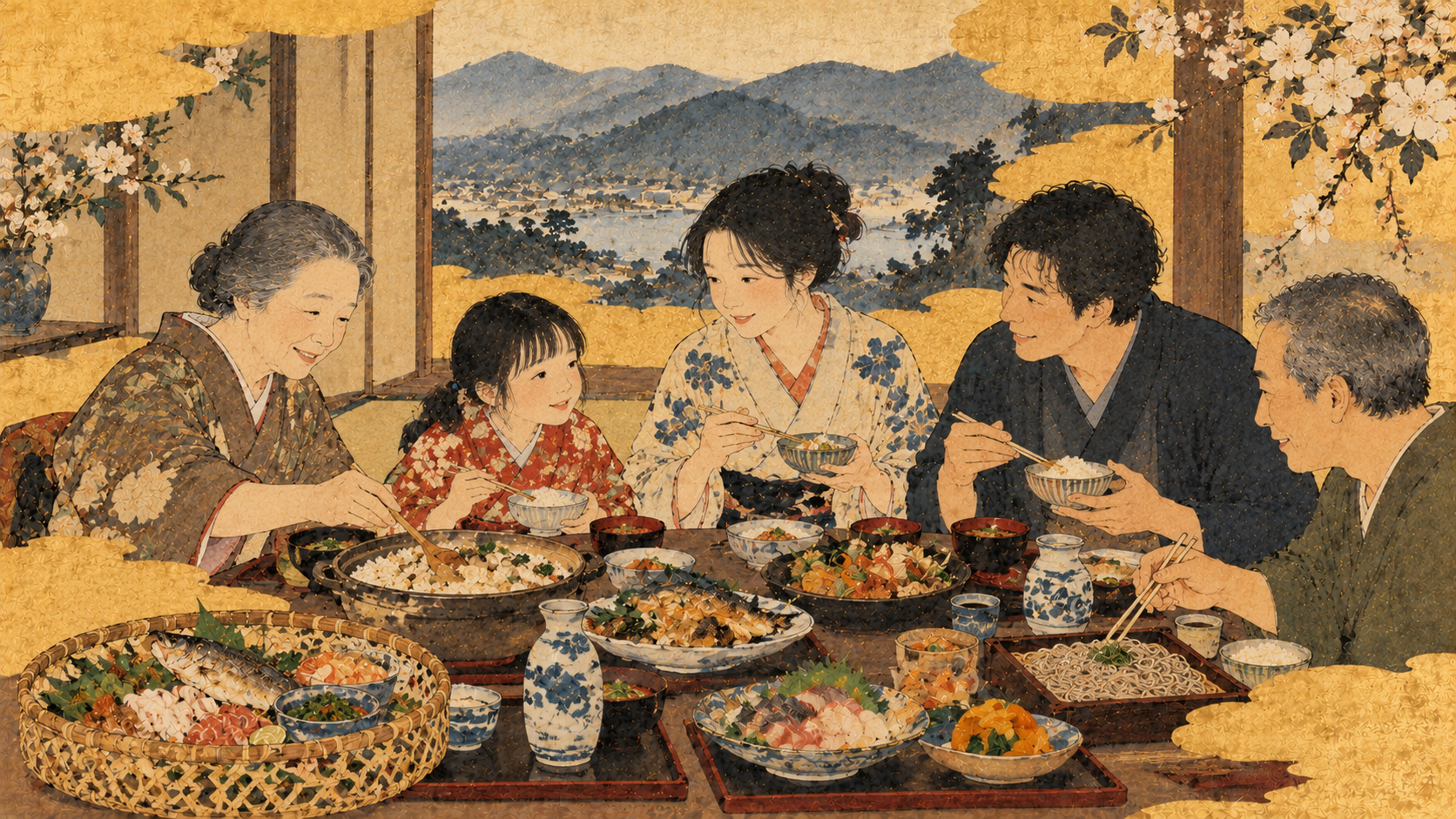
Preserving a dish for a century means preserving the people and occasions that bring it to the table.
A recipe is never only a recipe
In the Japanese town of Yanaizu, a sweet called awa-manjū carries a wish that disaster never strikes again. The Agency for Cultural Affairs traces the local tradition to a devastating fire in 1818 and the subsequent rebuilding of a temple. In Kurihara, Miyagi Prefecture, rice cakes served with tiny freshwater shrimp recall the ponds, farms and occasions that shaped rural life. These foods are edible records of how communities adapted.
The question facing Japan is not whether the dishes are picturesque enough for tourists. It is whether the practices that gave them meaning can survive the pressures of aging, mobility, changing diets and commercial standardization.
What changed this week
On October 20, the Agency for Cultural Affairs opened applications for its 2026 round of the “100-Year Food” recognition program, alongside a separate Food Culture Museum initiative. The application window closes November 20. The agency says it has recognized 329 food traditions and, separately, 149 food-related institutions.
Those are counts of recognition, not proof of economic impact or a claim that every recognized food is precisely a century old. The new call makes an old dilemma newly concrete: How can traditions be maintained when the people who know them may no longer live near the people who want to eat them?
An unusual definition of a century
The program has three divisions. One covers regional cooking traced to the Edo period. Another covers food culture born during the Meiji and Taishō eras. The third expressly looks forward: traditions that communities intend to sustain for a hundred years. That last category is significant. Japan is not restricting heritage to things preserved without change since antiquity.
To qualify, the agency requires a distinctive regional food culture rooted in local history and conditions; evidence that it has been enjoyed across generations; and an organization prepared to declare its intention to carry it forward. It is a cultural stewardship program, not an archaeological certificate of a dish’s precise birthday.
Shrimp, noodles and the soup that is not turtle
The government’s catalogue rewards a closer look. It describes somen-chiri in Itoshima, Fukuoka: thin noodles served with chicken, vegetables and a sweet-savory broth, historically prepared for shared labor and community gatherings. In Shiga Prefecture, Ōmi merchants left a food culture that includes yellow rice and doro-game-jiru, whose name evokes a muddy turtle but which is made with eggplant and sesame, not turtle.
These stories are worth more than a round-up of unusual menu items. Food can reveal how farming, trading routes, temple life and seasonal celebrations connected households long before regional dishes were photographed for social media.
The longer history behind the plates
Many foods survived because they solved practical problems. Drying, fermenting and salting preserved harvests and fish. Rice cakes marked ceremonial occasions. Noodles, stocks and the balance of ingredients varied as transportation networks and markets changed. To call a food “traditional” should not imply that no household ever altered the recipe.
Japan’s food heritage gained major international recognition when UNESCO inscribed washoku, traditional dietary cultures of the Japanese, on its intangible cultural heritage list in 2013. That inscription is not the same as the Agency for Cultural Affairs’ domestic 100-Year Food designation. Each works at a different scale and with different criteria.
Who gets to apply—and who may be overlooked
Local governments, associations, tourism organizations, food groups and other organizations may submit applications; individual applicants cannot. The rules permit one entry per organization, and most non-government applicants must provide evidence of activity and support from public authorities. A new online channel is available through G Biz Portal.
The structure may encourage durable community stewardship. It also invites a useful question: What happens to recipes held by a handful of elderly neighbors, or by small communities that do not have an association ready to fill out forms? That is an editorial concern, not evidence that the program has excluded a particular community.
Why museums are part of the story
The simultaneous Food Culture Museum call covers places such as museums, roadside stations and experience centers that help the public learn about food. The institutions must be broadly accessible. Their value could lie in a chance to watch someone prepare a dish or to learn why a tool was used, rather than only read a display panel.
Recognition alone cannot tell us how many schoolchildren learned a technique, how many cooks made a living, or whether a local specialty remained affordable for local people. Those outcomes require separate reporting.
The tourism opportunity—and its uncomfortable questions
The agency points to subsequent media coverage and products using the recognition mark. That may help food producers reach unfamiliar audiences, including overseas visitors looking beyond standard restaurant guides. But a recognized designation is not itself evidence of increased revenue, employment or survival of the tradition.
A destination can become famous for a dish and still lose the routines that sustained it. Festivals may change to suit visitors; old ingredients may become costly; one officially promoted recipe may eclipse other family versions. Successful preservation must leave space for living culture, not only its marketable image.
What a hundred years might really mean
The new round of recognition has not yet been decided. For now, the application itself is an invitation to name who will be responsible for a culinary inheritance. That may be a cook, a school, a cooperative, or a town government. The most meaningful measure will come after the photograph, certificate and publicity have faded: whether someone is still preparing the food and can explain why it matters.
The next century of Japanese cuisine may be determined less by the celebrated chefs of the big cities than by the neighbors who keep bringing something particular to a shared table.
Sources and reporting notes
Based on the Agency for Cultural Affairs’ official 2026 call, catalog and recent recognition releases. Historical origin stories are attributed to the agency; no original interviews were conducted.