- A homecoming with a sixteenth-century role
- Where and when the procession is supposed to happen
- From Seki to an international anime audience
- The other rider: actor Yuki Morinaga
- Who was Nōhime, and how much do we actually know?
- A marriage on a strategic frontier
- Why the name Gifu is associated with Nobunaga
- How a postwar parade became a civic tradition
- Celebrity attention is not the same as a tourism outcome
- The challenge of putting a historical woman center stage
- What a November 9 report must still establish
A homecoming with a sixteenth-century role
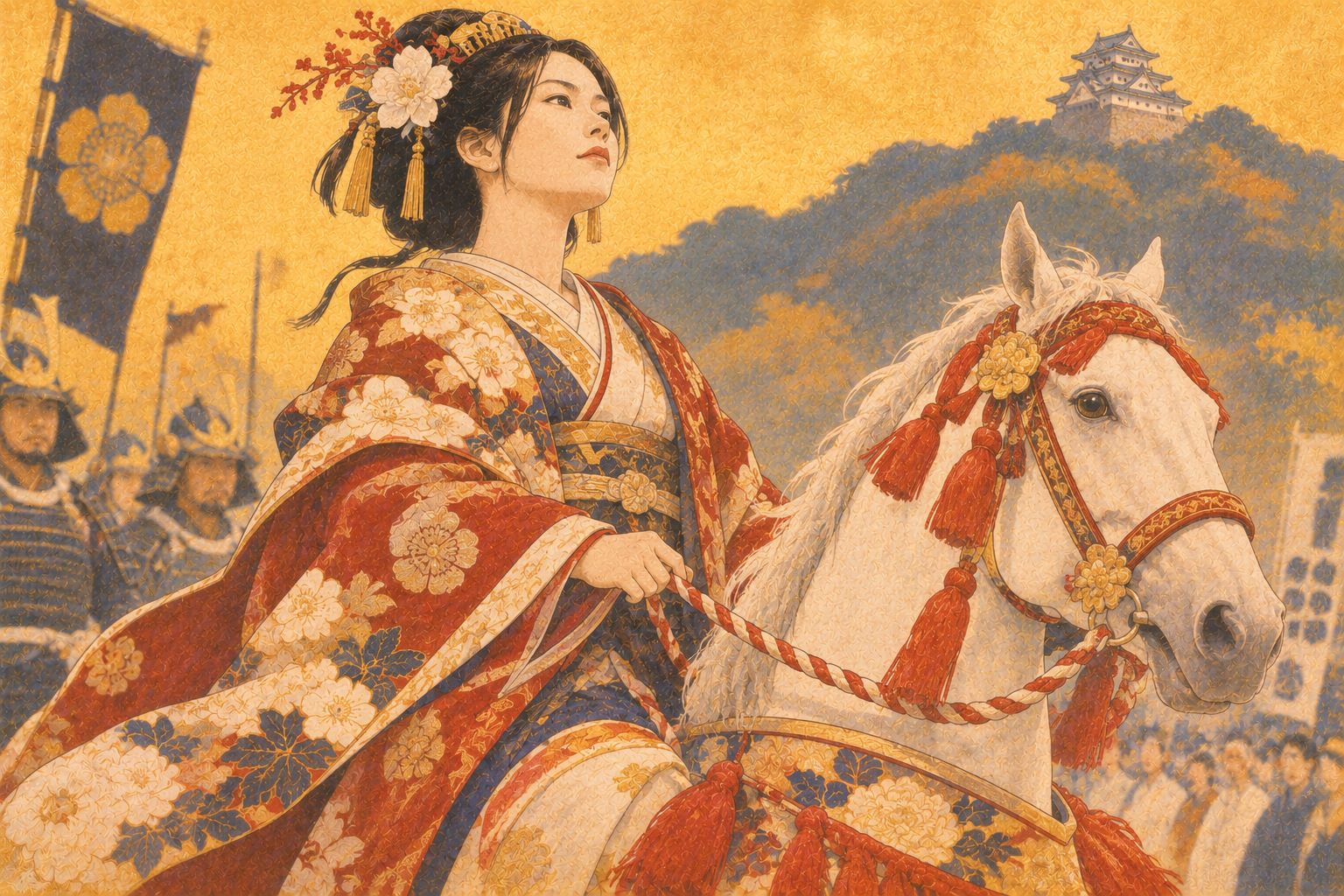
For one weekend in November, Gifu City is preparing to turn a central boulevard into a pageant of its Sengoku past. The headline guest is not an actor who specializes in historical drama, but LiSA, the singer whose work with Japanese anime has reached audiences worldwide. Born in Gifu Prefecture and widely identified as a native of Seki, she has been announced as Nōhime for the Nobunaga Cavalry Warrior Procession. Actor Yuki Morinaga will play Oda Nobunaga. The occasion is the 70th edition of the Gifu Nobunaga Festival, planned for November 7 and 8, with the principal parade on Sunday the 8th. Those are confirmed arrangements, not an eyewitness account of an event that has yet to take place at the research cutoff. The more interesting story goes beyond celebrity casting: a regional city is using pop music’s international reach to introduce the complicated history behind its public identity.
Where and when the procession is supposed to happen
Organizers schedule the procession for 12:45–2:30 p.m. on November 8 along Kinkabashi-dori, from Gifu City Culture Center toward Yell Gifu. A departure ceremony at the Culture Center is scheduled for 11:50 a.m., with a viewing arrangement for selected local schoolchildren and parents. Contemporary reporting describes a procession of roughly 300 participants along about a kilometer of downtown streets. These are plans, not measured attendance or completed parade statistics. The organizers also make two points that matter to fans: LiSA and the other special guest are not scheduled to sing, and visitors are asked to refrain from posting photographs or videos of the guests on social media. Weather and operational considerations can change the event. Gifu Broadcasting has announced a live telecast, but a broadcast listing is not proof of what ultimately occurs.
From Seki to an international anime audience
LiSA’s official Sony Music biography places her origins in Gifu Prefecture and traces the start of her career to a role singing for the fictional band Girls Dead Monster in the 2010 television anime Angel Beats! She released her solo debut mini-album, Letters to U, in 2011 and went on to record themes for globally recognized anime franchises. Local broadcasting identifies her hometown as Seki, a manufacturing city best known internationally for its tradition of blades. Her career helps explain why an invitation from a regional history festival can circulate far beyond its usual audience. Fans who have never studied medieval Japanese politics may recognize the musician immediately. The opportunity is to invite them into the history rather than merely treat the historical costume as a novelty.
The other rider: actor Yuki Morinaga
The city’s September 30 press announcement named Yuki Morinaga as Nobunaga. His agency published a corresponding casting notice, confirming that the procession is a public engagement rather than a newly announced television drama or film. In historical festivals, the central pair is surrounded by citizens recruited for supporting roles, musicians and other participants. The collective dimension should not disappear behind the famous faces. Morinaga’s appearance also points to the difference between historical interpretation and documentation: performing Nobunaga does not turn a modern participant into an authoritative witness to his politics, and a ceremonial pageant cannot reconstruct every feature of an event from the 1500s. It is a modern civic performance, deliberately using recognizable characters as its language.
Who was Nōhime, and how much do we actually know?
Nōhime is conventionally described as the daughter of Saitō Dōsan, lord of Mino, and the wife of Oda Nobunaga. Gifu City’s own cultural-heritage account identifies Dōsan’s daughter as Kichō, born to his wife Omi no Kata. The name Nōhime, broadly understood as “the lady from Mino,” is familiar in historical fiction, television and tourism. Yet the documentary trail is much less complete than popular treatments suggest. A reference inquiry hosted by Japan’s National Diet Library explains that reliable evidence for her later life is scarce and that accounts of divorce, death and her relationship with Nobunaga remain uncertain. Even the association of particular names and later memorial records with her is debated. A writer can tell audiences why she matters without manufacturing intimate conversations, heroic interventions or a definitive death date.
A marriage on a strategic frontier
Kichō’s marriage linked two political houses facing each other across the Mino–Owari border. Gifu City explains that Dōsan and Nobunaga’s father Nobuhide reached a peace in 1548 and that the marriage followed. A union of this kind served political purposes in Japan’s fragmented Sengoku world, though one should resist turning it into a simple, fully documented fairy tale or a single causal explanation for subsequent alliances. We have far more surviving material about campaigns and political decisions made by male warlords than about the daily choices of the women whose marriages bound those houses together. That asymmetry is itself part of Nōhime’s story. Her presence at the festival offers an opening to ask which historical lives become richly documented and which have to be approached through gaps and careful inference.
Why the name Gifu is associated with Nobunaga
In 1567 Nobunaga seized Inabayama Castle, drove out Saitō Tatsuoki and made the area a base for his ambitions. Gifu City’s official chronology credits him with changing the local name from Inokuchi to Gifu and developing its castle town. Policies commonly associated with his rule include market measures encouraging commerce and movement. This is the civic history that the procession commemorates: a military base also becoming a center of political symbolism and commercial activity. The city’s own records caution against an overly neat origin story. Versions of the name Gifu had appeared before Nobunaga; his significance was in popularizing it as the identity of his stronghold. Visitors can still connect the city’s modern streets with Gifu Castle and the surviving traces of the sixteenth-century town, rather than imagine the entire parade route has been preserved unchanged since then.
How a postwar parade became a civic tradition
The Nobunaga procession is not an unbroken ritual from the Sengoku period. Reporting published in 2026 dates a Nobunaga-themed parade to 1953, with its incorporation into the broader festival four years later. The 70th edition therefore marks a civic festival built and remade by modern residents, not 70 years of direct continuity from Nobunaga’s own court. That difference should enrich rather than diminish its meaning. Municipal traditions are frequently assembled from local history, entertainment, participation and commerce. Decades of volunteers, costume preparation, local businesses, cultural groups and city government have made the procession recognizable. Historical accuracy still matters, but so does the visible labor of communities choosing how to tell a story about themselves.
Celebrity attention is not the same as a tourism outcome
In 2022 actor Takuya Kimura portrayed Nobunaga, and contemporary news reporting cited an organizer estimate of approximately 460,000 visitors. That figure describes a different year and cannot be reused as a prediction or attendance report for 2026. A prominent guest can create extraordinary publicity, but the benefits and costs depend on crowd management, mobility, access for local residents, event spending and whether visitors return outside the festival weekend. Fans may discover the history of Nobunaga through LiSA, while local residents may judge success partly by whether the streets remain safe and the event still feels like their own. The city’s restrictions on posting guest images underscore that a cultural occasion is also a managed public event, not simply a source of photographs for online circulation.
The challenge of putting a historical woman center stage
The festival’s Nōhime casting places a woman at the center of a narrative often told through famous male warriors. Yet the historical woman’s own record is unusually fragmentary. Modern film and drama have repeatedly invented plausible inner lives to fill that gap. Responsible cultural journalism should be able to appreciate such performances while separating theatrical interpretation from surviving historical material. The Gifu connection is especially fertile: Nōhime embodies the relationship between Mino and Owari just before Nobunaga remade the political map, while LiSA embodies a very different movement between local beginnings and global attention. The juxtaposition is compelling without pretending the singer bears any physical resemblance to the historical figure or that the festival reenacts a documented journey made by Nōhime.
What a November 9 report must still establish
This article is based on official material available through November 6: the organizing committee’s schedule, the mayor’s announcement, agency biographies and historical records. It cannot truthfully describe the November 8 procession as completed, report how the crowd reacted or quote an on-site interview. Before a November 9 release, the newsroom should verify whether the procession took place, the named guests actually participated, whether an official crowd estimate was issued and whether there were major alterations or disruptions. If those facts remain unavailable, the future-tense framing must remain visible and any description should be limited to the announced program. Even as an advance feature, the story has value: it shows how a city’s identity is layered from commerce, political history, postwar ritual and a contemporary music culture with a reach far beyond Japan.
Sources and reporting method
Primary festival and municipal announcements take priority. Historical uncertainties surrounding Nōhime are checked against library reference research. Scheduled events are distinguished from observed outcomes.
- Gifu Nobunaga Festival organizing committee: September 30 guest announcement
- Gifu City: September 30 mayoral press conference
- Festival organizers: departure ceremony schedule and admission
- Sony Music: official LiSA profile
- Sony Music Artists: Yuki Morinaga announcement and profile
- Gifu City: historical chronology and 1567
- Gifu City: Dosan memorial and Kicho historical context
- National Diet Library collaborative reference: limits of evidence concerning Nōhime
- Gifu City: Nobunaga and the development of the castle town
- Gifu Broadcasting: live parade broadcast scheduled November 8
- Mainichi report: history of the parade and the 2022 event
- Gifu City: Nobunaga-era markets and commerce