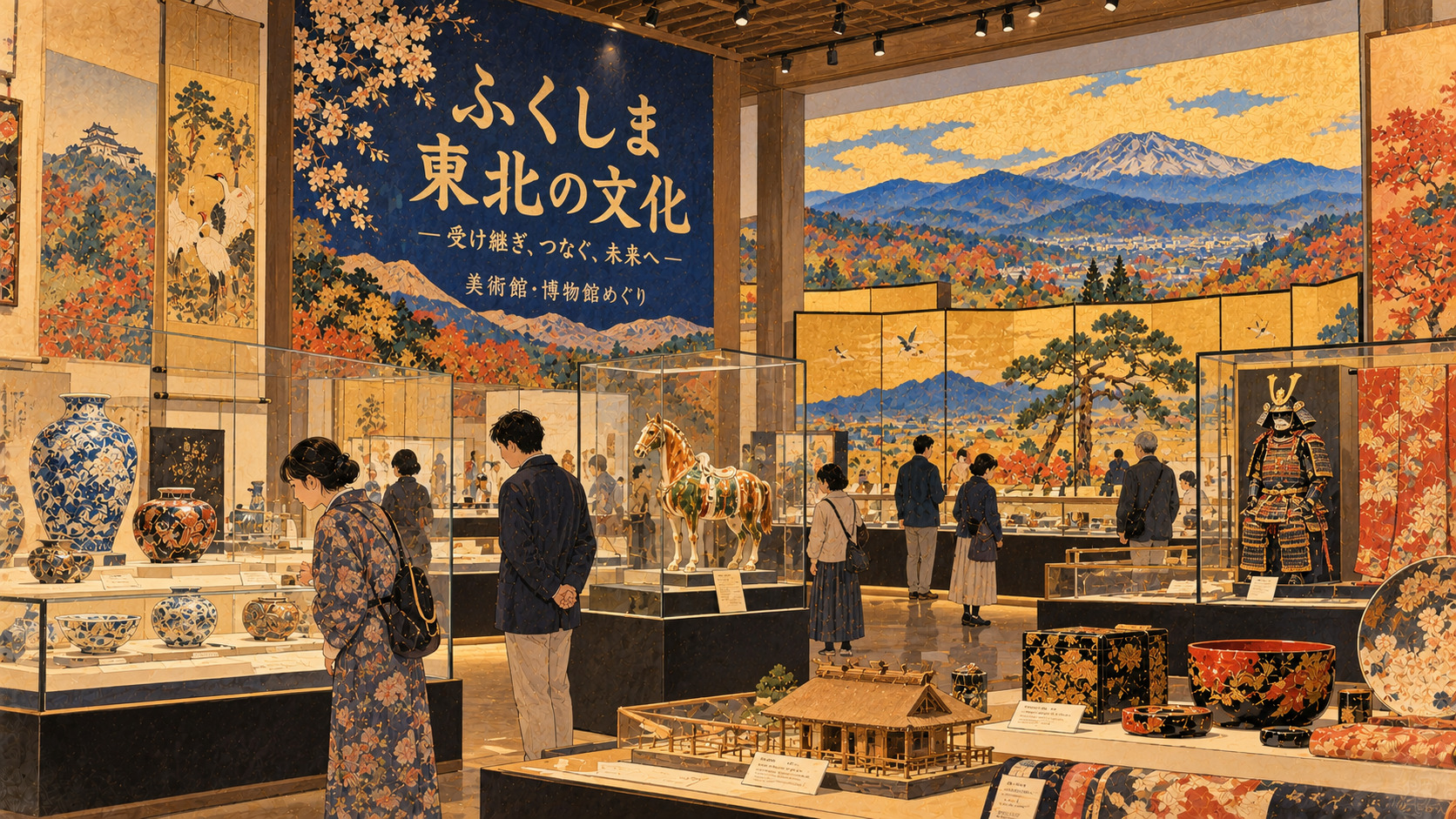
A cultural invitation with an important fine print
Fukushima’s museums and heritage centers are joining a month of events under Tohoku Culture Day, a coordinated effort by Japan’s six northeastern prefectures and the city of Sendai. The two official celebration days in 2026 are October 31 and November 1; participating activities continue through November 29. The offer is more varied than a blanket free-admission weekend. Some venues waive fees for everyone on specified days, others waive them only for young visitors or selected galleries, and still others run workshops or temporary exhibitions. Knowing the difference makes the program genuinely useful.
How six prefectures built a shared cultural calendar
The initiative dates to fiscal 2010. It was designed to make the cultural individuality of Tohoku more visible across administrative boundaries and encourage people to visit galleries, museums and historical sites outside their usual routines. Fukushima participates alongside Aomori, Iwate, Miyagi, Akita and Yamagata, with Sendai as an additional organizer. A new official portal for 2026 makes the activities easier to search by region and subject. The organizers hope to encourage travel and participation, although the economic results of this particular season cannot be known in advance.
At Mahoron, archaeology becomes something you do
In Shirakawa, the Fukushima Prefectural Cultural Properties Center’s Shirakawa facility, widely known as Mahoron, connects archaeological collections with practical learning. Its Autumn Festival is scheduled for October 31 and November 1, featuring familiar magatama-jewel making and limited-time hands-on activities. The site preserves material from excavations across the prefecture and uses objects to teach how earlier generations made and used things. General exhibition access is already free throughout the year; visitors should check separate workshop booking or capacity requirements with the center.
A small-town museum with a wide field of vision
The Ishinikuru history and folklore museum in Ishikawa town offers free entry to all exhibits on both October 31 and November 1. Its displays span archaeology, community history, folk culture and mineral collections, with interactive elements and video presentations. This is the kind of regional institution that can reveal a story absent from a conventional travel itinerary. A town’s relationship with the mineral world, its daily objects and inherited customs can be as revealing as the famous collections of a metropolitan museum.
Why the Fukushima Prefectural Museum of Art matters
At the Fukushima Prefectural Museum of Art in Fukushima City, high-school students and younger visitors can enter its special exhibitions free from November 1 through November 7, excluding closure days, according to the 2026 portal. The museum presents Fukushima-connected artists including Seiji Sekine and Kiyoshi Saito, while its autumn program features “Ukiyo-e Cat Encyclopedia,” scheduled October 10 to December 6. Free access is not universal: eligibility depends on the visitor’s age and gallery. A separate November 3 benefit applies to the permanent display for general and university visitors.
Aizu-Wakamatsu: a different museum date
The Fukushima Prefectural Museum in Aizu-Wakamatsu is planning free admission to its permanent exhibition for everyone on November 3—Japan’s national Culture Day—not automatically on November 1. Its current special exhibition, “The Challenge of the Asaka Canal: The Waterway that Opened Koriyama’s Future,” runs October 10 through December 6. The official listing puts general admission to that exhibition at ¥1,200 and admission for high-school students and younger visitors at no charge. Permanent and special collections are distinct admissions decisions. For travelers, that detail matters as much as the headline.
An irrigation canal and the invention of modern Fukushima
The Asaka Canal exhibition reaches back to the Meiji state’s effort to remake the landscape. Water brought from Lake Inawashiro helped transform the Asaka area and shaped Koriyama’s subsequent growth. By placing the canal within the story of regional development, the museum explains why infrastructure has cultural significance: it changes settlement, work and the map of daily life. The exhibition is also part of Fukushima’s 150th prefectural-government anniversary, giving a local engineering story a wider historical frame.
1876: when the prefecture took its present shape
On August 21, 1876, the Meiji government merged the former Wakamatsu and Iwaki prefectures into Fukushima Prefecture, broadly establishing its modern territory. The Fukushima Historical Archives’ anniversary exhibition “The Birth of Fukushima Prefecture,” running August 8 to November 15, uses official documents from the Meiji and Taisho eras. For English-language readers, it provides a valuable corrective to the idea that Fukushima has always been a single unified cultural region. Its Aizu, Nakadori and Hamadori districts have different histories that the modern prefecture now contains.
History through the hands in Iwaki
At the Iwaki City Archaeological Museum, learning sessions are scheduled for October 31 and November 1, and selected further dates in November. Programs include making magatama ornaments and exploring pottery, clay figures and haniwa forms. A workshop cannot replicate ancient manufacture in its entirety, but it can create a memorable encounter with material history. Families should verify capacity, participation charges and specific sessions before setting out; the portal lists the event dates but does not guarantee an unlimited number of places.
What makes Fukushima more than a disaster narrative
Fukushima’s 2011 earthquake, tsunami and nuclear accident make the preservation of memory an urgent responsibility. Yet cultural institutions also make a broader argument: the prefecture did not begin in 2011. Its museums hold evidence of prehistoric settlement, mountain travel, castle-town life, Meiji modernization and modern art. The prefectural museum traces the region from antiquity to the disaster, while Commutan Fukushima in Miharu provides environmental and radiation education. Viewing these different collections together produces a more complete picture of the place.
Access has a value that ticket prices cannot measure
Admission discounts are easy to advertise and difficult to evaluate. Did a free day bring in first-time visitors, or primarily people who already planned to go? Can families reach a museum without a car? Are accessible explanations and staffing available? Preservation also costs money long after an event has ended. The organizers have a legitimate aim in widening participation, but claims about increased visitor numbers or a tourism windfall would require actual attendance and spending data. Those outcomes remain unverified.
Choose one doorway into Fukushima’s past
The best way to experience Tohoku Culture Day may be to choose a single, well-matched institution rather than attempt an impossible tour. Children might make ancient-style ornaments in Shirakawa, mineral enthusiasts might visit Ishikawa, and art lovers might look to Fukushima City. Those with an interest in the making of modern Japan can save November 3 for Aizu-Wakamatsu’s permanent displays while budgeting separately for the Asaka Canal exhibition. The reward is not merely a lower admission price. It is discovering how many different stories Fukushima has been preserving in plain sight.
Sources and verification
Based on public program information available through October 29, 2026. Attendance effects have not been independently established. Individual venue terms may change.