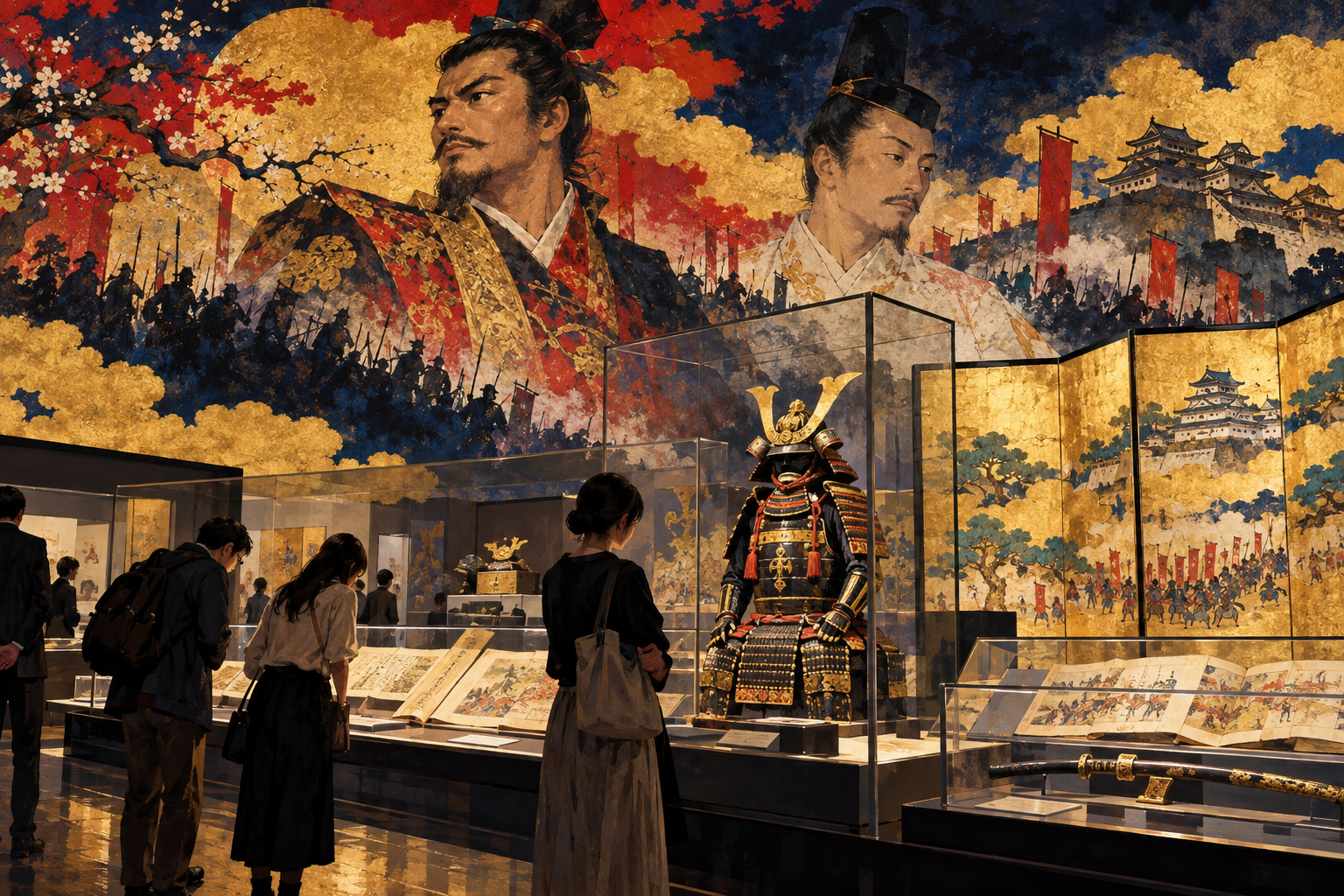
The Edo-Tokyo Museum’s special exhibition BROTHERS IN ARMS examines Toyotomi Hideyoshi and his younger brother Hidenaga through historical objects. Linked to NHK’s 2026 drama 豊臣兄弟!, the Tokyo exhibition runs until November 8.[1] It gives television audiences an opportunity to ask what material evidence can—and cannot—tell them about familiar characters.
Looking beyond the leading figure
NHK’s drama approaches the period through Hidenaga’s perspective.[5] The exhibition likewise brings the younger brother forward, addressing military activity, territorial government and relationships around the brothers.[2]
That emphasis offers a way to consider power as something maintained through several people and places. Following Hideyoshi alone can leave the work of governing and coordinating relationships outside the main story.
Different objects answer different questions
Among the listed exhibits are seventeenth-century portraits of Hideyoshi and Hidenaga from Zenrinji in Kyoto, scheduled for the first display period. An Edo-period folding screen depicts the Battle of Shizugatake.[2]
The date of a work matters as much as its subject. An image of a battle is not automatically a record made by an eyewitness. Later representations can also be studied for how the past was remembered and presented.
Sixteenth-century roof tiles excavated at Koriyama Castle and Osaka Castle provide another kind of evidence.[2] Building materials invite questions about castles and urban space, while portraits invite questions about representation. Looking across those differences can be more useful than treating every exhibit as an illustration of the same narrative.
Where storytelling meets evidence
In Japan.co.jp’s assessment, the value of a television-linked exhibition lies partly in the questions it encourages viewers to bring to the display. A compelling scene may establish a relationship in a drama; it does not establish that its dialogue or a character’s private thoughts survive in historical records.
Visitors can look for what an object’s date, provenance and description support, and where interpretation remains necessary. This approach allows enjoyment of the drama without asking museum objects to validate every scene.
Hidenaga’s role also deserves attention on its own historical terms. A modern image of the effective deputy may make him approachable, but should not replace examination of the military and territorial responsibilities discussed in the exhibition.
Check rotations before visiting
The main display periods run September 15–October 12 and October 14–November 8. Individual objects may follow other schedules, so check the official listing for anything you particularly want to see.[3]
| Venue / dates | Edo-Tokyo Museum, first-floor Special Exhibition Room; September 15–November 8, 2026 |
|---|---|
| Hours | 9:30 a.m.–5:30 p.m.; Saturdays until 7:30 p.m.; November 6 until 8 p.m. Last admission 30 minutes before closing. |
| Closed | Mondays except September 21, October 12 and November 2; also September 24, October 13 and November 4 |
| Regular exhibition-only admission | Adults ¥2,100; age 65+ ¥1,600; university/vocational students ¥1,300. High-school students and younger: free. Relevant student or age identification is required. |
These details follow organizer information. Tickets including the permanent exhibition cost extra; check current opening information and ticket types before visiting.[3][4]
