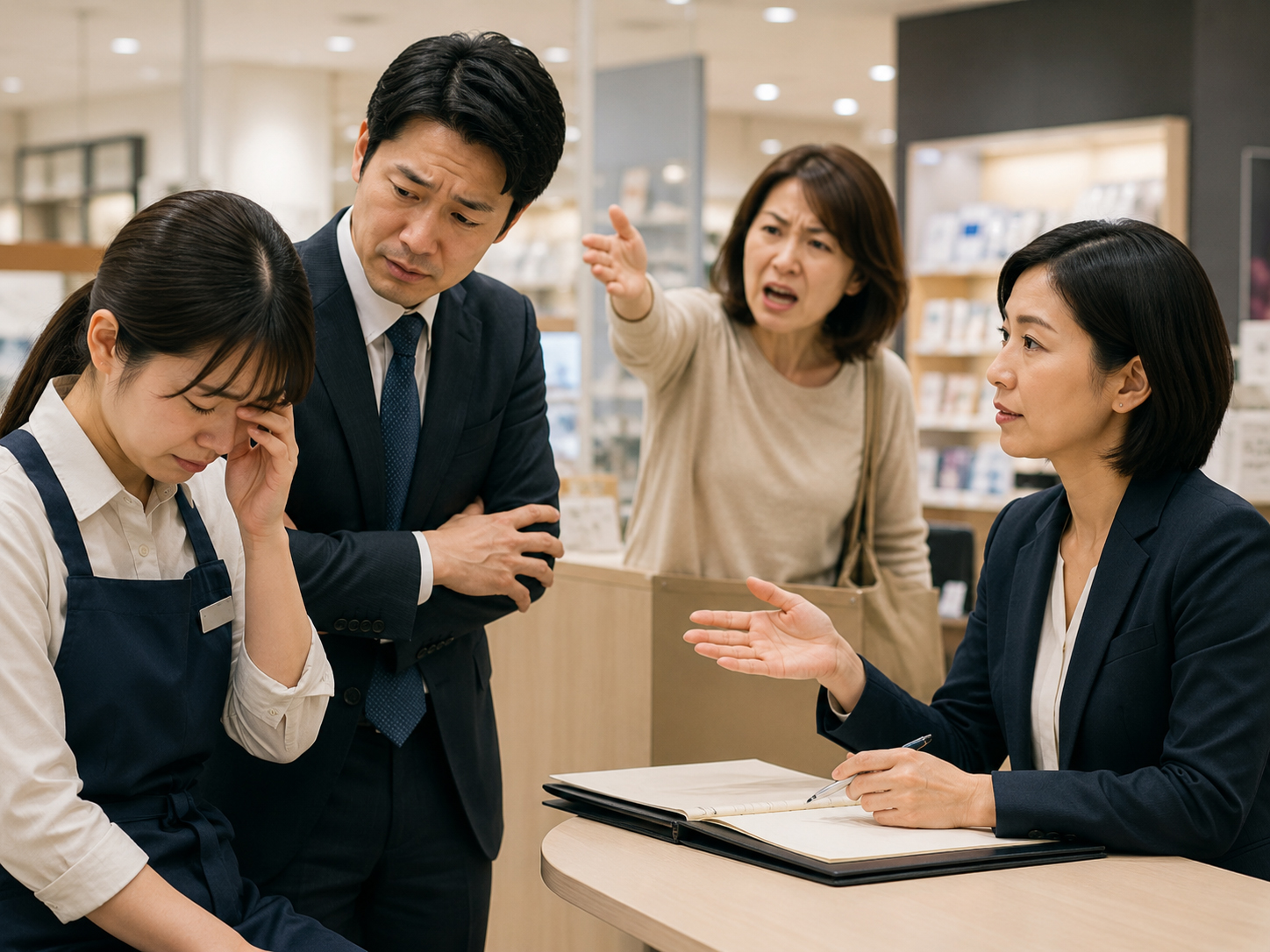
What makes this story sad is that it is not about extraordinary villains. It is about ordinary workplaces: supermarkets, train stations, hotels, call centers, hospitals, city offices and delivery counters. Workers are yelled at, lectured for long periods, pressured to kneel and apologize, exposed online, insulted and forced to absorb anger as if emotional harm were part of the job. In Japan, this is called customer harassment — kasuhara.
In June 2026, Japan Times reported that lawyers, municipalities and companies are increasingly helping workplaces respond to customer abuse. Behind that shift are Tokyo’s pioneering customer-harassment ordinance, a national employer-obligation framework due to take effect in October 2026, and years of union surveys documenting the problem. This is not just a customer-service issue. It is a question about whether Japan’s celebrated service culture can also protect the dignity of the people who deliver it.
The misreading of “the customer is god”
Japanese service culture has a beautiful side. Polite language, clean spaces, punctual trains, careful apologies and sincere attention to detail are part of what visitors admire. But the same culture can turn into an expectation that workers must absorb unlimited emotional labor.
The phrase “the customer is god” is often associated with singer Haruo Minami, who used it in the context of performing for an audience. In everyday business culture, however, the phrase has often been misread as meaning that customers may do almost anything. When companies fear complaints, managers fear bad reviews and frontline workers are left alone to apologize, the power balance shifts too far.
What counts as customer harassment?
Tokyo’s ordinance defines customer harassment as seriously troublesome behavior by customers and others toward workers that damages the working environment. It can include violence and threats, but also excessive demands without legitimate reason, verbal abuse, intimidation, long detentions and other degrading behavior.
The distinction matters. A legitimate complaint is not harassment. Customers have the right to point out mistakes, ask for explanations and seek remedies. The problem begins when criticism becomes humiliation, coercion or personal attack. There is a difference between requesting a refund and demanding a worker kneel. There is a difference between asking for improvement and posting an employee’s name and face online.
From Tokyo ordinance to national obligation
Tokyo passed Japan’s first broad customer-harassment prevention ordinance in October 2024 and implemented it in April 2025. It has no criminal penalties, but it draws a social line: customer harassment should not be tolerated. Tokyo also created public-awareness and business-support programs.
The movement then spread nationally. Amendments to Japan’s labor policy law created employer duties to take measures against customer harassment, scheduled to begin in October 2026. Companies will need policies, consultation systems, worker-protection measures, documentation procedures and response rules for abusive customers. Kasuhara is moving from “something the worker must endure” to “a labor-management risk the employer must address.”


Why lawyers are entering the workplace
Lawyers are becoming part of the response because frontline workplaces often cannot draw boundaries alone. Workers do not feel empowered to refuse a customer. Store managers worry about revenue and reputation. Headquarters fears social-media backlash. As a result, the burden falls on the person with the least power.
External lawyers and consultation systems are not there to turn every complaint into a lawsuit. They are there to help companies decide where the line is. When should a customer be asked to leave? How should recordings or notes be kept? When should police be called? Can a company end dealings with an abusive customer? How should name badges and employee information be protected? These are not only manners issues. They involve labor law, duty of care, privacy and sometimes criminal risk.
The AI that softens angry voices
The problem has even reached technology. Reuters reported that SoftBank was developing AI software to convert angry customer voices into calmer tones for call-center workers. It is an ingenious idea — and a troubling symbol. It may reduce stress, but it also suggests a society trying to make abuse sound less abusive instead of stopping it.
AI may help. But the deeper solution is not to filter anger. It is to define acceptable conduct. Customers have the right to be dissatisfied. They do not have the right to destroy the mental health of the person in front of them.
- Clear definitions of customer harassment
- Consultation systems so workers are not isolated
- Recording and reporting procedures
- Rules for warnings, removal and refusal of service
- Protection of name badges, personal data and social-media exposure
- Training that separates legitimate complaints from abusive demands
Protecting the people who serve Japan
Customer-harassment prevention is not about making service colder. It is about making good service sustainable. A workplace that breaks people cannot keep providing hospitality. A system that requires endless smiles and unlimited apology is bad for workers, companies and customers alike.
This story is sad because people have been hurt simply for doing their jobs. But the law, ordinances and lawyer-supported systems show that society is at least beginning to see the pain. Japan can keep its culture of careful service. It now has to build an equally serious culture of protecting the people who provide it.
Sources and references
This Japan.co.jp report is based on Japan Times, Tokyo Metropolitan Government, MHLW materials, Reuters, union reporting and corporate-policy background.
- Japan Times: Customer harassment continues despite moves to prevent abuse
- Tokyo Metropolitan Government: Customer Harassment Prevention Promotion Project
- MHLW: 2025 amendments on labor policy and harassment measures
- Business Lawyers: 2026 employer obligations for customer-harassment prevention
- The Guardian: Tokyo ordinance and customer harassment background
- Reuters: SoftBank AI tool to soften angry customer calls