- The day the leaderboard changed hands
- What the winning technique tells us
- Two yokozuna, two very different battles
- From Atami to the highest ranks of sumo
- The near-misses that shaped the stakes
- Why Onosato is such a consequential opponent
- The title race is wider than one rivalry
- A yokozuna win is not automatically a kinboshi
- Fukuoka and the last honbasho of the year
- A championship still has to be won
The day the leaderboard changed hands
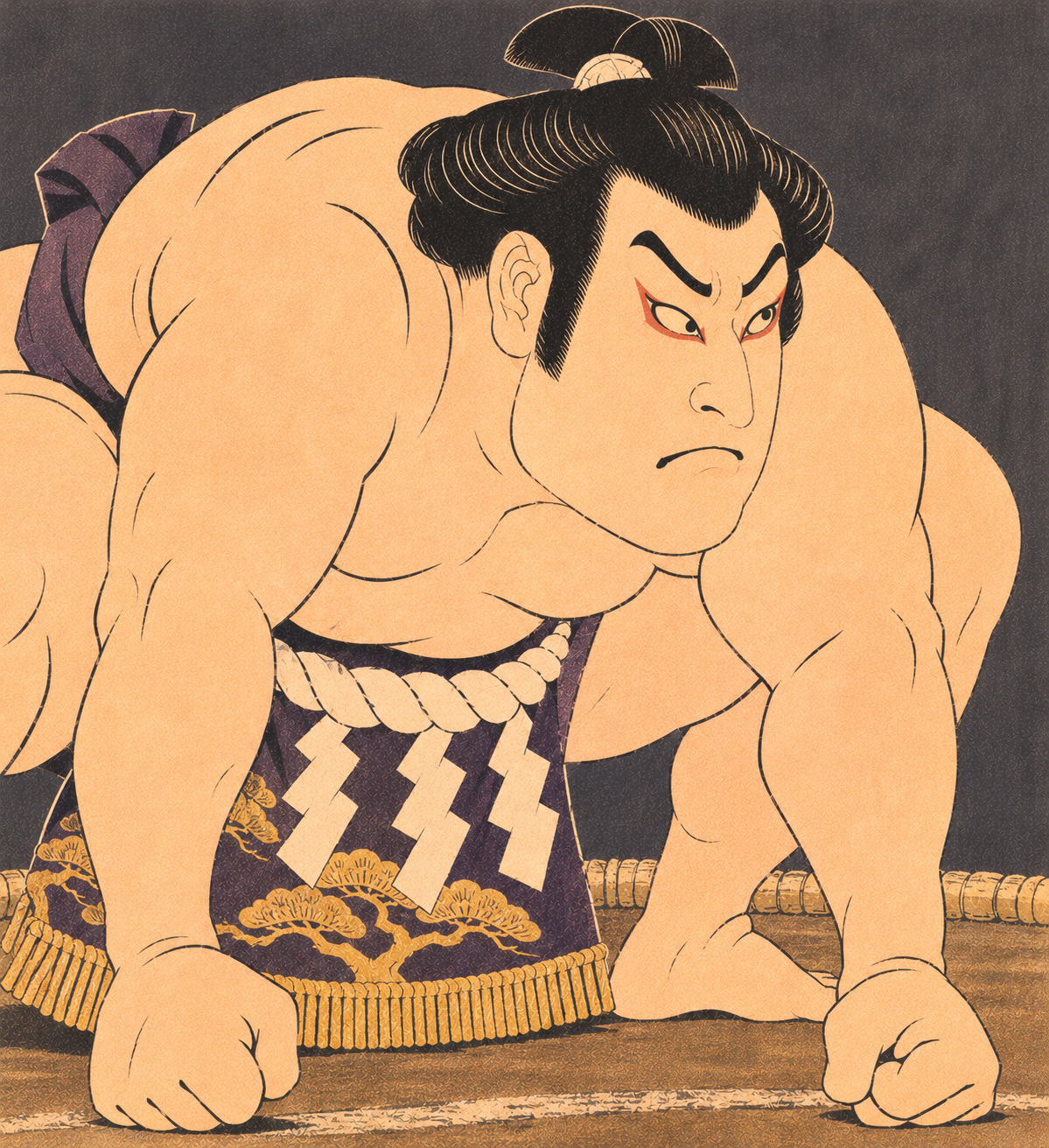
A sekiwake pushed a yokozuna out of the ring in Fukuoka on November 17, 2026, and the Kyushu Grand Sumo Tournament suddenly looked different. Atamifuji Sakutarō, wrestling from the west sekiwake position, defeated east yokozuna Onosato Daiki by oshidashi—a frontal push-out—on Day 10. The two had entered the bout with one loss apiece.
Atamifuji improved to 9–1, sharing the lead with maegashira Wakamotoharu. Onosato fell to 8–2. And the result was not an isolated surprise: one day earlier, Atamifuji had also defeated yokozuna Hōshōryū by push-out. Consecutive wins over both yokozuna made him the central story of the tournament’s middle stretch.
The numbers in this feature are explicitly through the completed tenth day, November 17. The 15-day tournament runs until November 22. Publication under a November 20 dateline must not be mistaken for a verified account of bouts that had not been completed when these sources were checked.
What the winning technique tells us
The official winning technique was oshidashi: pushing an opponent out without needing the decisive grip that defines a belt-based force-out. Contemporary Japanese bout reports describe Atamifuji winning the initial collision and driving forward even as Onosato attempted to establish a right-hand inside position. The wrestler who usually likes to grapple kept the action moving toward the boundary.
The Japan Sumo Association describes Atamifuji’s preferred techniques as right-hand inside grappling and yori, or force-out. That makes consecutive push-out victories over two yokozuna especially revealing. He was not merely waiting for the perfect belt grip; he was able to win through forward pressure and balance against elite opposition.
Onosato, whose own strengths include thrusting, pushing and right-hand-inside attacks, is not a passive rival. This was a confrontation between two wrestlers capable of imposing their weight and momentum. The verified record establishes the technique and outcome, but it should not be turned into an invented internal monologue about either man’s tactical intentions.
Two yokozuna, two very different battles
On Day 9, Atamifuji resisted Hōshōryū at the edge and drove him out, clinching kachi-koshi, a winning record of at least eight bouts. On Day 10, he had the initiative much earlier against Onosato. Both wins were recorded as oshidashi, yet the shape and timing of the attacks were different.
That versatility matters because a tournament is not a single match. Opponents present different grips, stances, speeds and risk profiles. A wrestler who relies on one pattern can be neutralized as rivals adjust. Atamifuji’s results show what he achieved in two specific bouts, not a guarantee that he will solve every challenge ahead.
Some Japanese reporting has discussed a personal connection to a coach from his youth. Without an independently confirmed statement establishing his emotions or motivations for these particular bouts, this report does not offer a sentimental explanation as fact. The wrestling itself is compelling enough.
From Atami to the highest ranks of sumo
The official association lists Atamifuji’s birth name as Takei Sakutarō and his birthplace as Atami, Shizuoka Prefecture. Born September 3, 2002, he debuted professionally in November 2020. He reached the second-tier jūryō division in March 2022 and the top makuuchi division that November.
He belongs to the Isegahama stable. Listed at 185 centimeters and 198 kilograms, he combines formidable mass with a sumo style built around securing position and moving forward. His ring name carries the place name Atami, linking a nationally recognized resort city to the highly local world of stables, coaches and apprenticeship.
Atamifuji first reached the san’yaku ranks in March 2026 and entered this tournament as west sekiwake. Sumo’s professional ladder is not a simple win-loss ranking: promotion depends on performance across tournaments and available positions in the hierarchy. A rise from promising youngster to contender near the summit therefore involves sustained results, not one dramatic victory.
The near-misses that shaped the stakes
This is not Atamifuji’s first close encounter with the championship. In September 2023, he finished the scheduled 15 bouts at 11–4 and reached a championship playoff against ōzeki Takakeishō, only to lose. Later reporting documents additional playoff appearances in 2026, including a three-way finish in July.
A playoff exists when wrestlers tie for the best record after the regulation tournament. A three-way playoff may use a sequence in which the first wrestler to win twice consecutively takes the title. Reaching such a decider demonstrates a wrestler’s consistency over the full event, but it can also make defeat especially stark: fifteen days of work can come down to a few seconds.
As sekiwake, Atamifuji also occupies a pivotal rank below ōzeki. Promotion to ōzeki is not awarded for defeating a yokozuna once or for reaching a particular number of wins in isolation. Officials consider results and quality of performance over a sequence of tournaments. The November run strengthens his sporting case; it has not conferred a promotion.
Why Onosato is such a consequential opponent
Onosato, born June 7, 2000 in Tsubata, Ishikawa Prefecture, made his professional debut in May 2023. He entered the top division in January 2024, reached ōzeki in November 2024 and became the 75th yokozuna in July 2025. The speed of that progression distinguishes him even in a sport with a long history of young champions.
The Japan Sumo Association lists his strengths as thrusting, pushing, right-hand-inside grappling and driving forward. At 190 centimeters and 188 kilograms according to the official profile, he is himself an imposing figure. He began the November tournament with a defeat to komusubi Yoshinofuji, then won eight consecutive bouts before running into Atamifuji on Day 10.
Yokozuna is sumo’s highest rank and carries a weight of expectation beyond the arithmetic of a single tournament. But rank is a measure of demonstrated achievement, not immunity to a challenger’s attack. On November 17, a sekiwake was better in the brief contest that counted.
The title race is wider than one rivalry
After Day 10, Atamifuji and Wakamotoharu stood at 9–1. Four wrestlers—Onosato, ōzeki Kirishima, Kinbōzan and Dewanoryū—were at 8–2. Kirishima had been part of the one-loss group before falling to ōzeki Aonishiki by an underarm throw on November 17.
Wakamotoharu, a maegashira, defeated Asahakuryū that same day and remained level with Atamifuji. The tournament narrative therefore extends beyond the sekiwake’s victory over a star yokozuna. A wrestler outside the san’yaku ranks was putting together an equally strong record in the standings.
The next listed matchups were Atamifuji against ōzeki Kotozakura and Onosato against sekiwake Fujinokawa. Those were scheduled bouts in the material available on November 17, not final results. Any article updated after the later sessions should replace this snapshot with newly verified standings rather than quietly pretending the earlier figures remain current.
A yokozuna win is not automatically a kinboshi
For international readers, the Japanese term kinboshi—literally a 'gold star'—requires care. It is generally awarded when a maegashira, or rank-and-file top-division wrestler, defeats a yokozuna in a regulation bout. Atamifuji was a sekiwake when he defeated Hōshōryū and Onosato. These were major victories, but they were not kinboshi under sumo’s rules.
Sekiwake and the broader san’yaku are ranks with distinct expectations. Special prizes awarded to deserving wrestlers are considered separately, generally toward the end of the tournament, and should not be reported as settled on Day 10. The terminology matters because it identifies precisely why two visually similar upsets may be recorded differently.
The same caution applies to kachi-koshi, winning records, rankings and playoffs. A grand sumo tournament is simultaneously a sporting event and a system of rank-based advancement. Explaining both systems gives new readers a way into the competition without flattening its traditions.
Fukuoka and the last honbasho of the year
The November tournament, commonly called the Kyushu basho, is the final grand tournament on Japan’s annual calendar. Japan’s modern six-tournament schedule took shape in 1958. Each honbasho consists of fifteen days of bouts in the top division, giving the closing days their distinctive pressure.
The 2026 event runs from November 8 to November 22 at the Fukuoka Kokusai Center, according to the published schedule. That places Atamifuji’s Day 10 breakthrough at the edge of the tournament’s decisive stretch. The calendar gives the story a dramatic setting but does not itself predict who will lift the Emperor’s Cup.
Fukuoka’s location also illustrates how a sport associated internationally with Tokyo is staged as a nationwide institution. Four cities host the six annual top-level tournaments, exposing different regional audiences to the same rigorous hierarchy and rituals. This report does not claim to have interviewed spectators at the arena or witnessed their reactions directly.
A championship still has to be won
Atamifuji’s wins over both yokozuna have already changed the story of the November tournament. They have not settled the championship, awarded an ōzeki promotion or established that he will win his remaining bouts. Tournament standings can swing when leaders face one another, when an injured wrestler withdraws, or when a chasing group wins while a frontrunner stumbles.
The same applies to Onosato. Moving to two losses does not automatically eliminate him from contention. With five competition days remaining after Day 10, a one-win gap could be overturned. A professional assessment separates the excitement of a demonstrated performance from speculation about a result still ahead.
What is established is substantial: a 24-year-old sekiwake from Shizuoka defeated the two highest-ranked men on consecutive days and entered the closing third of the Kyushu basho tied for the lead. That is the news. The ending belongs to the wrestlers, not to the headline writer.
Sources and Reporting Limits
Independently composed from Japan Sumo Association profiles and tournament records, bout-by-bout listings and Japanese reporting available through November 17. No firsthand interview, arena reporting or independent video analysis was conducted. This is a historical Day 10 snapshot, not a verified up-to-the-minute November 20 leaderboard.
- Japan Sumo Association: Atamifuji official profile
- Japan Sumo Association: Onosato official profile
- Japan Sumo Association: November 2026 tournament results
- Japan Sumo Association: tournament information
- Sports Navi: Atamifuji November results through November 17
- Sports Navi: Onosato November results through November 17
- Yomiuri Shimbun: Day 10 title race, November 17
- Nikkan Sports: Atamifuji defeats Hoshoryu, November 16
- Japan Sumo Association: 75th yokozuna Onosato
- Sports Navi: 2026 November tournament schedule