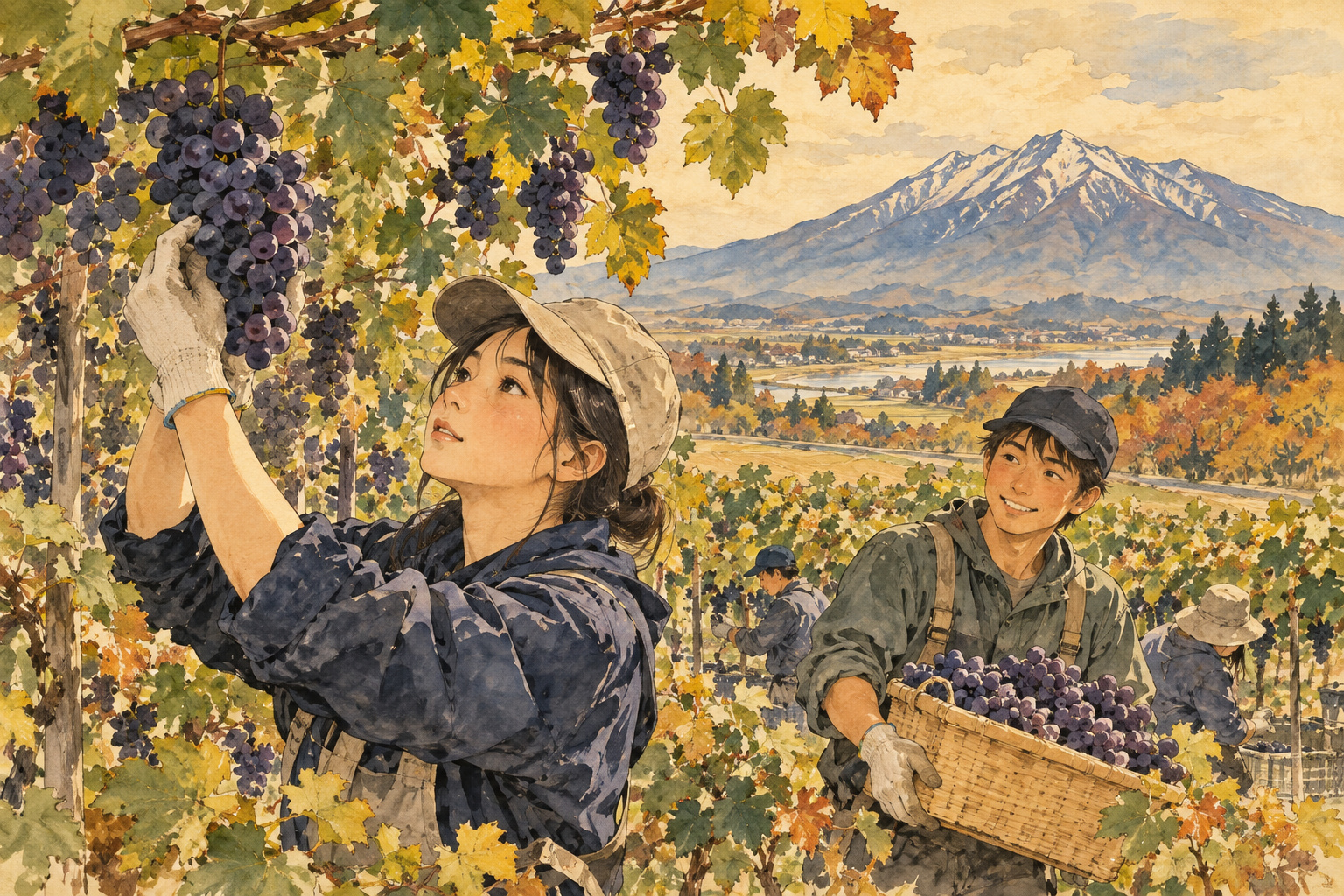
Tsuruta’s Steuben grapes have a season that stretches beyond the picking basket. Harvested in autumn, the dark-purple fruit can remain a winter offering through specialist storage—a useful distinction in a country where grapes are often associated with the warmer months.
As the main harvest approaches, the Aomori town’s growers are preparing to bring that story to a wider audience. A September 24 prefectural notice says Tsuruta officials and the Tsuruta Steuben youth growers’ group will visit the governor on September 30 to report on the 2026 crop and promote the 14th Steuben Grape Festival.[1]
Growers step forward
The announced delegation includes group chair Tomohiro Miura. The visit gives producers a public role in presenting the crop, linking a recognizable fruit with the people responsible for growing it. It is scheduled after this Sunday edition; the announcement contains no measured sweetness results or harvest-volume figures for 2026.[1]
For readers discovering the variety, its appeal begins with the fruit itself. Tsuruta’s official Steuben website describes a sweet, seeded grape and places the usual peak harvest in early to mid-October. That is a seasonal guide, rather than a confirmed picking timetable for every vineyard this year.[3]
A regional name with a defined meaning
Japan’s agriculture ministry registered Tsuruta Steuben as a geographical indication in March 2019. Its description identifies sweetness of at least 18 degrees Brix and good keeping qualities. The designated production area includes Tsuruta and specified areas of neighboring municipalities.[2]
The protected regional product should therefore be distinguished from the Steuben variety generally. Its stated quality characteristics are also not measurements of this year’s crop. The ministry links the product’s qualities to local growing conditions and cultivation practices.[2]
The work continues after picking
The ministry describes October-picked grapes being shipped until around the following February, supported by storage know-how developed through the region’s apple industry. That gives the crop a place in the winter fruit market and makes post-harvest handling part of its identity.[2]
Commercial storage is not a promise that a bunch will last for months in a home refrigerator. The town’s grape website advises choosing firm berries and sound stems, refrigerating the fruit in a bag and washing it just before eating.[3]
More than one way to discover the crop
Tsuruta also lists grape juice and wine among its local specialties. These offer additional ways to encounter the fruit, beyond buying a fresh bunch during the harvest season.[4]
The youth group’s promotional appearance brings another dimension to that introduction: the growers themselves. A distinctive regional crop depends on people who can cultivate it, handle it carefully and explain why it deserves a place on the table. This autumn’s planned visit is an opportunity to make those connections visible.
