- A title decided at 20-all
- Why the score alone misses the contest
- Patient defense, aggressive initiative
- A home event for an athlete from another prefecture
- How Kumamoto became a World Tour stop
- The route to the championship
- The athlete behind the reputation
- A broader Japanese presence on finals day
- What a regional tournament can build
- What the victory does—and does not—tell us
- The importance of telling the story accurately
A title decided at 20-all
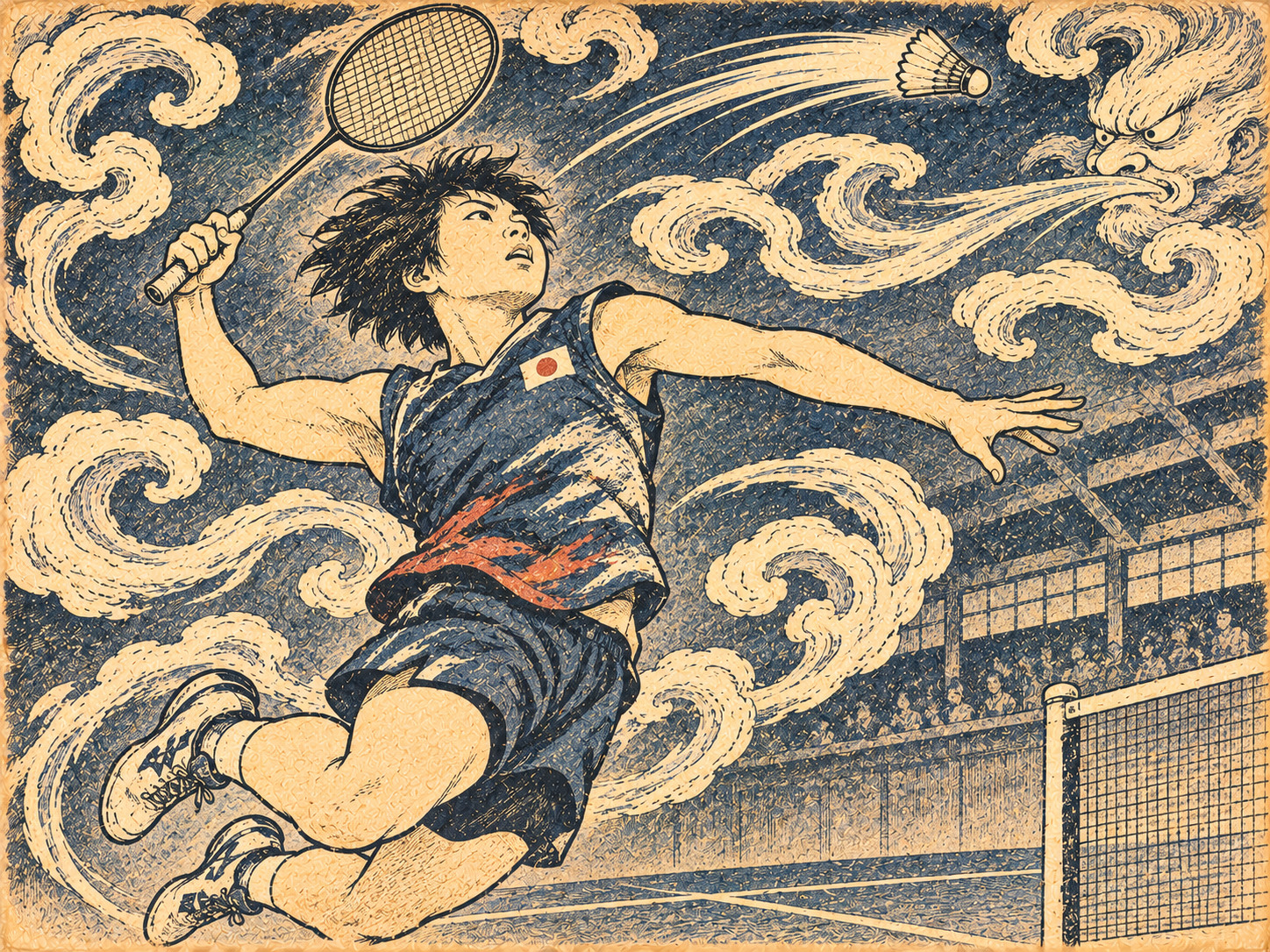
The championship did not end when Akane Yamaguchi reached 20 points in the second game. Her Chinese opponent Wang Zhiyi was there too. At 20–20 in the Kumamoto Masters final on November 15, the winner still needed a two-point advantage. Yamaguchi took the next two rallies, completing a 21–14, 22–20 victory in 49 minutes. It was her second Kumamoto Masters title, the first having come in 2024, and her fourth World Tour title of 2026 according to local reporting. The outcome was confirmed in the Japan Badminton Association's November 16 tournament report.
Why the score alone misses the contest
Yamaguchi controlled much of the first game after the early exchanges, absorbing a challenge from Wang before pulling clear. In the second, the Chinese player opened a 9–4 lead. Yamaguchi recovered to enter the interval ahead 11–10, and neither contender could make a decisive break through the closing rallies. The apparent simplicity of a straight-games score disguises the tactical adjustment required to win 22–20. It was not a walkover and should not be reported as one.
Patient defense, aggressive initiative
The finalists knew each other's game well. Wang favors sustained, carefully constructed rallies; Yamaguchi's extraordinary court coverage can turn defense into a sudden attack. In her post-match comments, the Japanese champion described preparing for patient exchanges while trying to raise the tempo when the opening appeared. She also acknowledged that the second game forced changes. That is a more useful account than simply praising determination: victory came from alternating restraint and acceleration, and from changing a plan without abandoning it.
A home event for an athlete from another prefecture
Yamaguchi was born in Fukui Prefecture and attended Katsuyama High School. Her professional base, however, is in Kumamoto, where she represents Saishunkan Pharmaceutical. For a touring athlete, a home crowd is not always the crowd of one's birthplace. Yamaguchi made that distinction in comments reported after the final, saying that winning at her training base felt especially gratifying. She also spoke about hoping her performance would give spectators encouragement for the following day. The sentiment helps explain why this title matters beyond the trophy.
How Kumamoto became a World Tour stop
Kumamoto Masters Japan is a Badminton World Federation World Tour Super 500 event, below the Super 750 and Super 1000 tiers but still a significant international tournament. The Japan Badminton Association records the event's first staging in Kumamoto in November 2023. The fourth edition ran November 10–15, 2026, at Kumamoto Prefectural Gymnasium. The structure brings leading overseas players to a city outside Tokyo and Osaka, making elite badminton visible to regional audiences. Yamaguchi won the local women's singles title in 2024 and reclaimed it after a two-year interval.
The route to the championship
The road to Sunday's final had its complications. Yamaguchi defeated fellow Japanese player Riko Gunji 21–13, 21–12 in the quarterfinal. In the semifinal against China's Chen Yufei, she lost the opener 18–21, won the next game 21–8 and led 11–4 in the deciding game when Chen retired. A retirement is not a completed three-game victory, and the record should say so. In the other semifinal, Wang defeated Japan's Tomoka Miyazaki 21–10, 21–15. That produced a final between two established leading players rather than a meeting of untested prospects.
The athlete behind the reputation
The Japan Badminton Association lists Yamaguchi as born on June 6, 1997, right-handed and 156 centimeters tall. Her career, however, cannot be reduced to measurements. She has won World Championships in 2021, 2022 and 2025, according to Yonex's official player record, as well as the All England title in 2022 and multiple Japan Open championships. The distinctive feature of her game is the speed with which she resets after a difficult rally: balanced footwork, sharp changes of angle and an ability to retrieve shots that appear unreachable. These are the building blocks of a career, not a claim that a single tournament proves permanent dominance.
A broader Japanese presence on finals day
Yamaguchi was not Japan's only champion at the event. Kie Nakanishi and Rin Iwanaga won the women's doubles, defeating compatriots Chiharu Shida and Ririna Hiramoto 21–19, 21–15. In the men's singles, Koki Watanabe finished runner-up to India's Lakshya Sen; Takuro Hoki and Yugo Kobayashi were beaten in the men's doubles final. The results show Japan's competitive breadth but also underscore the quality of the visiting opposition. Winning in Kumamoto required overcoming top-class players, not merely relying on home advantage.
What a regional tournament can build
International sporting events are sometimes judged by visitor numbers, hotel nights or media visibility. Those measures may be useful, but a serious account requires actual data. Public materials reviewed for this article did not provide a verified, independent estimate of the 2026 tournament's economic impact. There is a different, less easily counted contribution: a young player in Kumamoto can watch top-ranked internationals at close range, and a local club can see the standard to which it might aspire. Yamaguchi's post-final remarks connect that community value to the athlete's own motivation.
What the victory does—and does not—tell us
The result matters to Yamaguchi's 2026 season, particularly after reaching the Korea Open final the preceding week, but it cannot by itself determine year-end ranking or future outcomes. The best conclusion is more precise. Against a familiar opponent who excels at extended rallies, she defended patiently, found an extra attacking gear and adapted when the second game became uncomfortable. In a sport decided by fractions of a second, that capacity to change is often as valuable as raw speed. In Kumamoto, it delivered two championship points when the score was level.
The importance of telling the story accurately
A major win is easy to inflate. Calling it her first Kumamoto title would ignore 2024. Treating the semifinal retirement as a match played to completion would distort her route. Describing ranking positions without the date of the ranking can make a temporary snapshot appear timeless. This report uses the contemporaneous association record, tournament score reporting and player accounts, and separates documented play from tactical interpretation. That discipline leaves enough drama in the actual sporting achievement: a world-class badminton player winning on her professional home court, then speaking about what the crowd might take away from watching.
Sources and reporting limitations
This article is based on the Japan Badminton Association’s official result reports, player records, contemporary tournament coverage and published post-match comments. JAPAN.co.jp did not conduct an on-site interview and does not claim an independent economic impact analysis for the event.
- 日本バドミントン協会:熊本マスターズ2026決勝結果 / Japan Badminton Association final-day report
- 日本バドミントン協会:山口茜選手プロフィール / National team biography
- 日本バドミントン協会:大会開催・取材案内 / Tournament media information
- 日本バドミントン協会:2023年度事業報告 / Federation 2023 annual report
- ヨネックス:熊本マスターズ2026優勝 / Yonex match and winner report
- バドミントン・マガジン:決勝スコア・経過 / Badminton Spirit final results
- バドミントン・マガジン:山口選手の試合後談話 / Player post-final interview
- バドミントン・マガジン:準決勝結果 / Semifinal results
- 熊本日日新聞:山口選手の地元優勝 / Kumamoto Nichinichi newspaper
- ヨネックス:山口茜の主要戦績 / Yonex player achievements
- 日本バドミントン協会:2026年派遣選手 / Federation delegation