What is known—and what is not
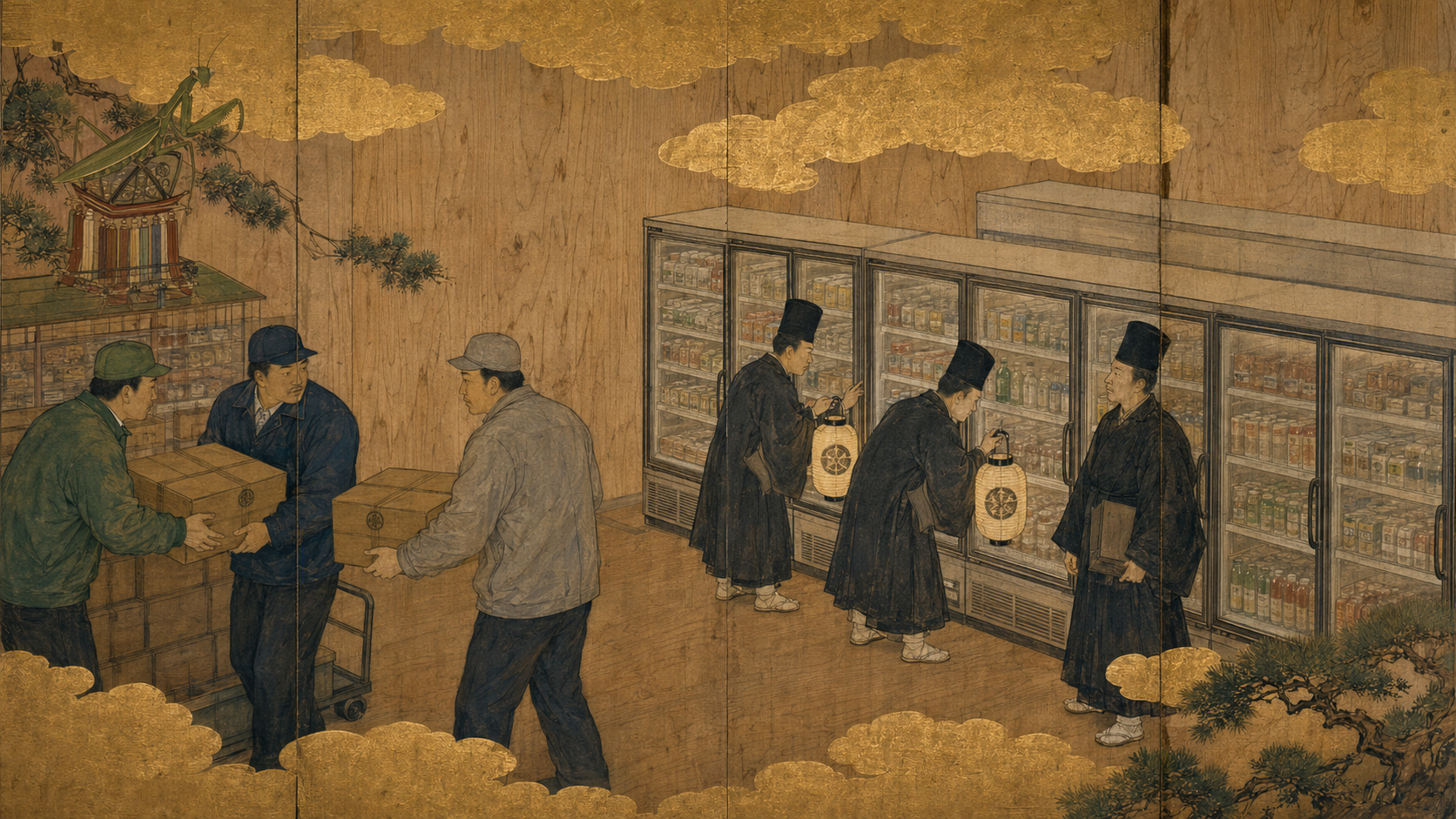
On July 14, the JFTC inspected Fuji Electric offices in Tokyo's Shinagawa Ward, Nakano Refrigerators in Minato Ward and SDRS in Isesaki, Gunma Prefecture. Reports citing informed sources say Seven-Eleven Japan selected suppliers every few years for refrigerated and frozen cases, and that the three manufacturers are suspected of deciding in advance which company would win in each prefecture. Winning suppliers installed equipment at new and renovated stores during the contract period; the three reportedly secured most recent orders.
Other reporting says the companies may have coordinated winners and prices on multiple occasions beginning around 2020. All three acknowledged the inspections and said they would respond sincerely or cooperate fully. Nakano's own notice described the inquiry as involving the sale, delivery and installation of refrigeration equipment.
Unknowns are just as important. No tender count, contract value, alleged overcharge, communication channel or individual role has been published. It is not public when Seven-Eleven first became aware of the concern, whether any company sought leniency, or whether the evidence will support an order. Numbers and motives should not be invented to fill those blanks.
What does “raided” mean here?
English headlines commonly say “raided,” while the Japanese term is tachiiri kensa, an on-site inspection. JFTC officials may secure and examine documents, email, chat, quotation data and devices as one step in an administrative investigation. It does not mean police made arrests or that a court found guilt.
If the evidence supports a suspected violation, the commission ordinarily gives companies notice of proposed orders and the evidence, with an opportunity to submit views. It may then issue a cease-and-desist order to restore competition and a surcharge order based on sales or other amounts connected with the infringement. Only especially serious or malicious cases with broad public impact, or cases where administrative measures cannot achieve the law's purpose, are candidates for criminal accusation. An ordinary inspection does not automatically become a criminal case.
Bid-rigging is more than discussing a price
Article 2(6) of the Antimonopoly Act defines an “unreasonable restraint of trade” broadly: businesses jointly fixing or restricting price, output, technology, facilities, customers or other activities in a way that substantially restrains competition in a particular field. Preselecting a winner, dividing territories, submitting deliberately high cover bids, rotating contracts or compensating a loser through subcontracting are classic mechanisms.
| Competitive tender | Typical collusive pattern | Possible evidence |
|---|---|---|
| Each bidder independently calculates cost, capacity and risk | Winner or territory chosen beforehand | Meetings, calls, messages and allocation lists |
| Firms improve price or performance to win | Others submit intentionally high or noncompliant bids | Shared errors, formulas, metadata or artificial spreads |
| Awards change with capacity and offers | Rotation or fixed market shares | Long-run patterns, territory maps and compensation work |
Similar prices or repeat winners alone do not prove a cartel. Input costs, logistics, electrical specifications, service networks and production capacity may produce similar bids. A concentrated specialist market may naturally have few qualified suppliers. The critical issue is whether competitors stopped deciding independently and communicated a plan that restrained competition.
Why antitrust law covers a private tender
This was procurement by a private company, not a tax-funded public-works tender. It is not kansei dango, bid-rigging involving public officials, and there is no report at this stage of involvement by the buyer's employees. Nevertheless, an agreement among rivals over prices or customers can violate Article 3's ban on unreasonable restraints.
Competition law protects more than the public purse. It preserves the buyer's chance to obtain better equipment at lower lifetime cost, room for new suppliers, franchise economics and ultimately consumer welfare. Seven-Eleven buys the equipment and leases it to operators, and franchisees account for about 99% of its domestic outlets, Jiji reported. Whether any equipment cost reaches royalties, remodeling charges, store profit or shelf prices depends on contracts and accounting; no price effect has yet been established. But when competition weakens, someone eventually bears the long-run cost.
A cold shelf is a system, not a single product
Refrigerated display cases keep drinks, prepared food, dairy, ice cream and frozen meals at safe temperatures while presenting them for sale. The Japan Refrigeration and Air Conditioning Industry Association recorded 256,475 domestic shipments in fiscal 2025: 139,859 self-contained units and 116,616 remote-condensing units.
A tender that appears to price one box actually bundles case design, refrigerant, compressor, piping, construction, controls, remote monitoring, spare parts, nationwide repair coverage and remodeling schedules. Compatibility with existing store dimensions and control systems, overnight work and the ability to replace equipment without interrupting food sales create entry barriers. A low purchase price may conceal higher energy or service costs.
That complexity is not an excuse for coordination; it is a procurement challenge. Specifications tied too closely to one incumbent model can suppress entry. Choosing only the lowest upfront bid can raise breakdown and power costs. Buyers need transparent scoring for performance, energy, refrigerant, installation, service and total cost of ownership.
Competition policy from 1947 to today
Japan enacted the Antimonopoly Act and created the JFTC in 1947 as Occupation-era pillars of the move away from wartime controls and concentrated zaibatsu power. Enforcement sometimes weakened amid industrial-policy priorities during high growth. The 1977 strengthening amendment introduced administrative surcharges to deter cartels.
After decades in which “turns” and “territories” became normalized in parts of construction, general-contractor corruption and collusion scandals became national issues in the 1990s. The 2005 steel-bridge case brought criminal accusations against numerous major firms. A reform effective in 2006 raised surcharges, gave the JFTC compulsory-investigation powers for criminal cases and introduced leniency, creating a powerful reason for the first cartel member to report from inside.
A 2019 amendment added cooperation discounts reflecting how much an applicant helps uncover the truth, not just its place in line. In the Tokyo 2020 test-event case, the JFTC accused six companies and seven individuals in 2023, showing that allocation schemes can flourish in events and digital documents as well as concrete and steel. The refrigeration inquiry differs in scale, evidence and private setting, but carries the same structural risk: a long relationship can turn rivalry into an internal allocation system.
Surcharges, criminal punishment and damages follow separate tracks
| Measure | Purpose | Decision-maker |
|---|---|---|
| Cease-and-desist order | End the agreement and restore competition through board action and notice | JFTC |
| Administrative surcharge | Impose a financial disadvantage to deter violations | JFTC |
| Criminal penalty | Punish an especially serious offense | JFTC accusation, prosecution, court judgment |
| Civil damages | Compensate a buyer or others for proven loss | Claimant and court |
The JFTC's FAQ says a cartel surcharge is generally calculated from relevant sales or equivalent amounts during the infringement, using base rates such as 10% for large companies and 4% for small and midsize firms, then adjusting for factors including leadership, repetition, early termination and leniency. No defensible estimate for this matter is possible until the market, duration, relevant sales, company status and cooperation are established.
Why leniency destabilizes a secret agreement
Every cartel member benefits if all remain silent. Leniency creates a prisoner's dilemma: the first company to report may receive dramatically better treatment. From the program's January 2006 launch through fiscal 2024, the JFTC received 1,682 reports, including 109 in FY2024; commission material reports 182 in FY2025.
Cooperation after an inquiry begins can still matter, while concealing evidence, blocking another report or submitting false material can destroy eligibility. The immediate compliance task is therefore to preserve devices and records, stop deletion, expand legal holds and interview employees independently. Nothing public identifies a leniency applicant in this case, and the order of inspections reveals nothing reliable.
What data can—and cannot—detect
A buyer can monitor winning-bid ratios, the spread between first and second bids, regional win rates, withdrawals, recurring price endings, file timestamps, shared IP addresses or templates, and subcontracting back to losing firms. Three bidders combined with rigid regional winners and losing prices that are always just above the winner would merit scrutiny.
Statistics are a lead, not a verdict. Disasters, factory capacity, service networks, new refrigerant rules and transport distances can also create geographic patterns. Economic analysis becomes persuasive only when checked against communications, internal directions and actual cost and capacity. An algorithm should raise a flag; people should actively test innocent explanations.
Ten safeguards for buyers
| Control | Practical action |
|---|---|
| Market sounding | Test capacity anonymously, including new and regional suppliers. |
| Lot design | Compare national, regional and multi-year structures to widen entry. |
| Specifications | Define performance, energy, refrigerant and service—not a brand. |
| Independent estimate | Build from materials, construction and logistics, not the last award. |
| Certificate | Require an accountable officer to attest to independent bidding and contacts. |
| Audit trail | Preserve quotation versions, submitters, timestamps and Q&A. |
| Analytics | Monitor spreads, withdrawals, territorial stability and work flowing back. |
| People | Rotate procurement roles and disclose conflicts, gifts and hospitality. |
| Speak-up route | Give staff, installers and franchisees a protected external channel. |
| Remedy | Write rebidding, termination and loss-calculation rights into contracts. |
What documents matter next
The next reliable milestone is a JFTC announcement. If the commission finds an infringement, its orders should define the product and geographic market, the agreement's period and mechanics, each firm's role, relevant sales, corrective action, surcharges and published leniency treatment. The inquiry could also close without an order. Company disclosures may address progress, provisions, independent governance reviews and management responsibility.
Seven-Eleven will face questions about tender audits, price revalidation, franchisee communication, total ownership costs and supplier diversity. Consumers should not jump to the claim that lunch prices will immediately rise; no causal link between an overcharge and shelf prices has been shown. Yet cold cases across tens of thousands of stores are infrastructure, connecting small purchasing decisions to electricity, remodeling, food safety and franchise viability. That is why establishing whether the bids were genuinely independent matters.
Sources & further reading
- Jiji Press / nippon.com: Three Firms Raided over Allegedly Rigged Seven-Eleven Refrigeration Bids — sites, regional tenders and franchise structure.
- TV Asahi affiliate report — allegation of coordinating winners and prices from around 2020.
- Nakano Refrigerators: Notice of the JFTC Inspection — primary company statement.
- JFTC: Conduct Regulated by the Antimonopoly Act.
- JFTC Antimonopoly Act FAQ — surcharges, leniency and criminal-accusation policy.
- JFTC: FY2025 Antimonopoly Act Enforcement.
- JFTC: 70 Years of the Antimonopoly Act — the 1947 law and 1977 reform.
- JFTC: 2005 Steel-Bridge Bid-Rigging Case.
- JFTC: Tokyo 2020 Test-Event Bid-Rigging Accusation.
- JRAIA: Japanese Refrigerated Display-Case Shipments.
- Japanese Law Translation: Antimonopoly Act.